


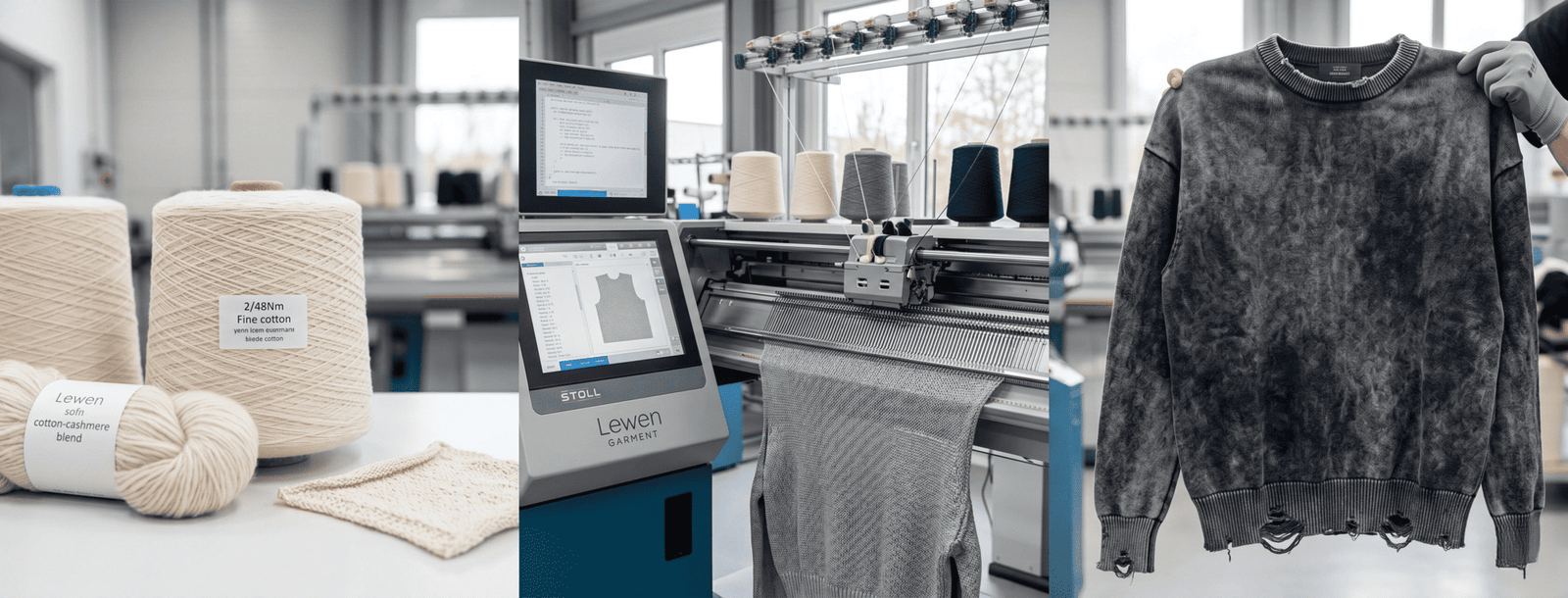
Getting a knitwear piece right — both in texture and design — is never as simple as “pick a style and sew it up.” For independent designers and streetwear brands that care about their supply chain, understanding how a knitwear factory actually operates is the key to controlling quality and keeping costs in check.
Here’s the full custom production workflow — yarn counts, core knitting techniques, post-finishing processes — no fluff, just what you need.
1. Materials: 2/48Nm and Cotton-Cashmere Blends
Every sweater starts with the yarn. In custom orders, 2/48Nm shows up constantly.
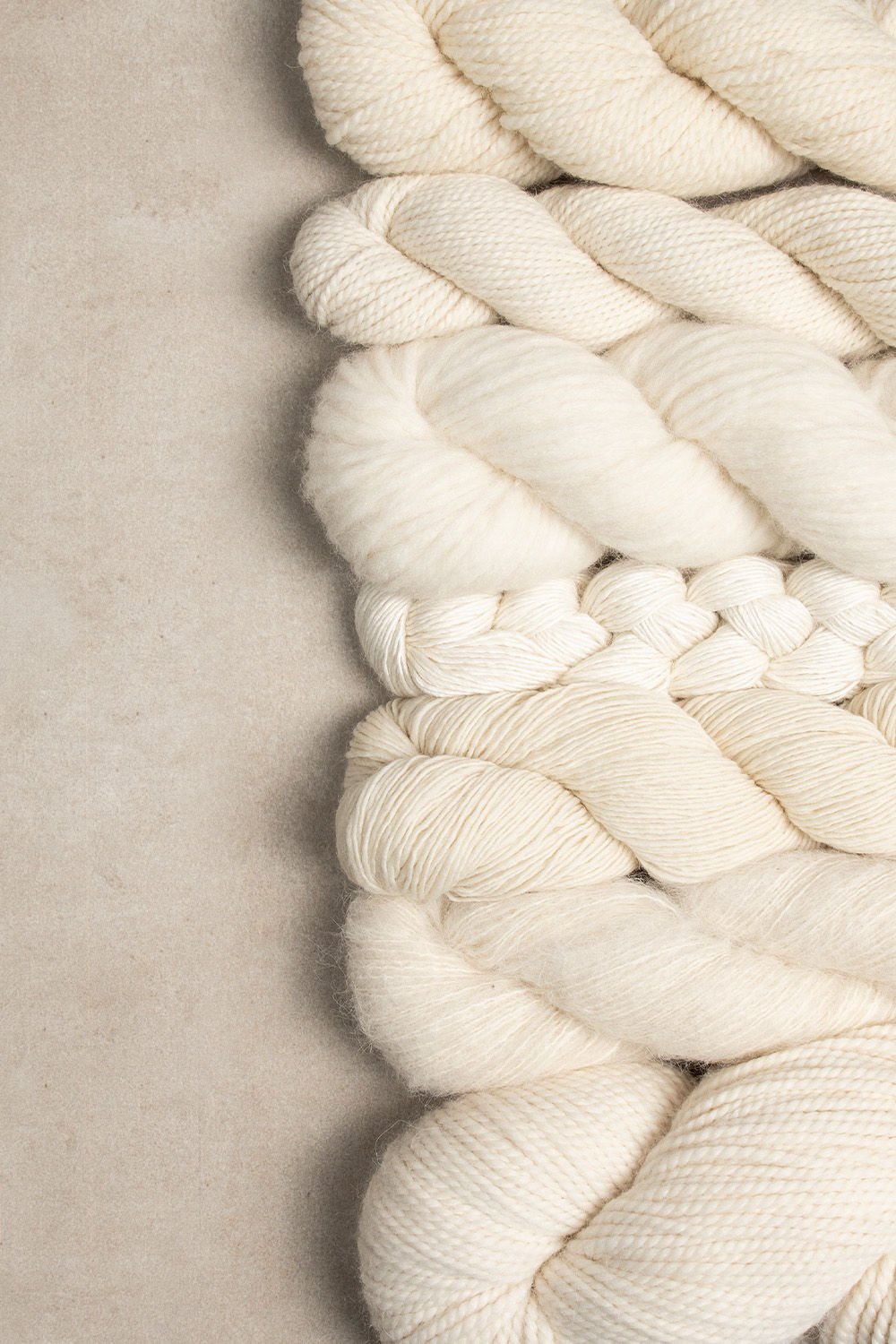
What Is 2/48Nm?
Nm (Metric Count) measures yarn thickness. 2/48Nm means two strands of 48-count single yarn twisted together.
- Hand feel: A 2/48Nm sweater has a smooth, refined surface. It’s not bulky like a chunky knit, but it holds warmth well and drapes beautifully.
- Best for: Premium pullovers or lightweight base layers — whenever you’re after that polished, elevated look.
Cotton-Cashmere Blends
Cashmere is expensive and finicky to maintain. Pure cotton, on the other hand, can feel heavy and stiff. A cotton-cashmere blend (say, 85% cotton + 15% cashmere) splits the difference. You get the breathability and structure of cotton, plus the soft, downy hand of cashmere. For mid-to-high-end fall/winter pieces, this ratio is a safe bet.
2. The Factory Floor: Knitting Calculations, Programming, and Plating
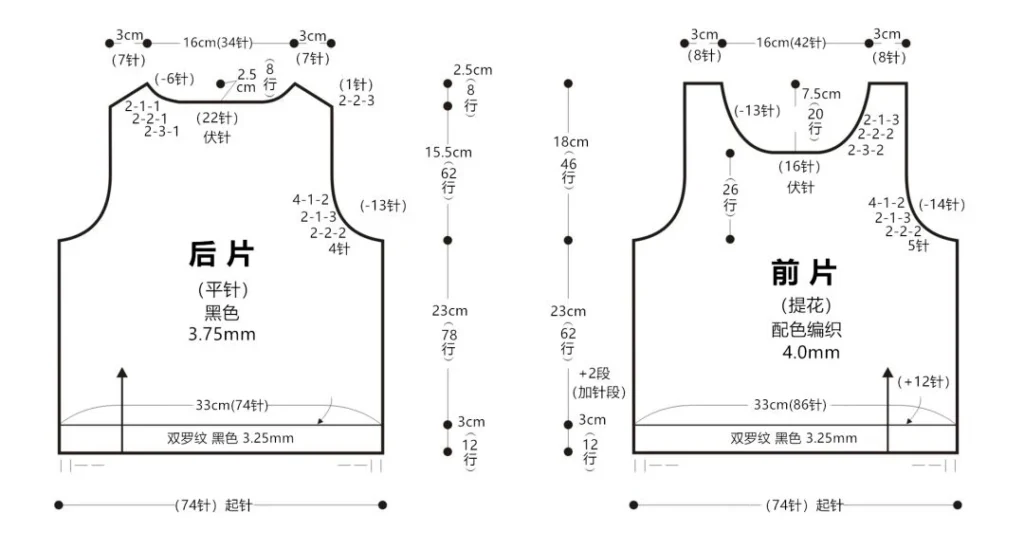
- Knitting calculations (pattern drafting): Woven garments use paper patterns. Knitwear doesn’t — it’s all about loops. A skilled technician works from the design sketch and calculates the exact stitch and row count for the chest, armhole, and collar. Get this wrong, and the entire sizing goes sideways.
- Jacquard programming: Turning complex jacquard or cable patterns into code that computerized flat knitting machines can read.
- Plating: A yarn-feeding technique where one yarn covers another. The face and back of the fabric end up with different textures or colors. Great for dual-color effects or localized reinforcement — exactly the kind of detail streetwear brands obsess over.
3. Acid Wash, Distressing, and Other Finishes
Before the yarn touches the machine, a technical stage determines the fit and silhouette.
A flat-knit sweater doesn’t always deliver the streetwear look on its own. The post-finishing stage is where a brand’s identity really locks in.
Acid Wash and Vintage Fading
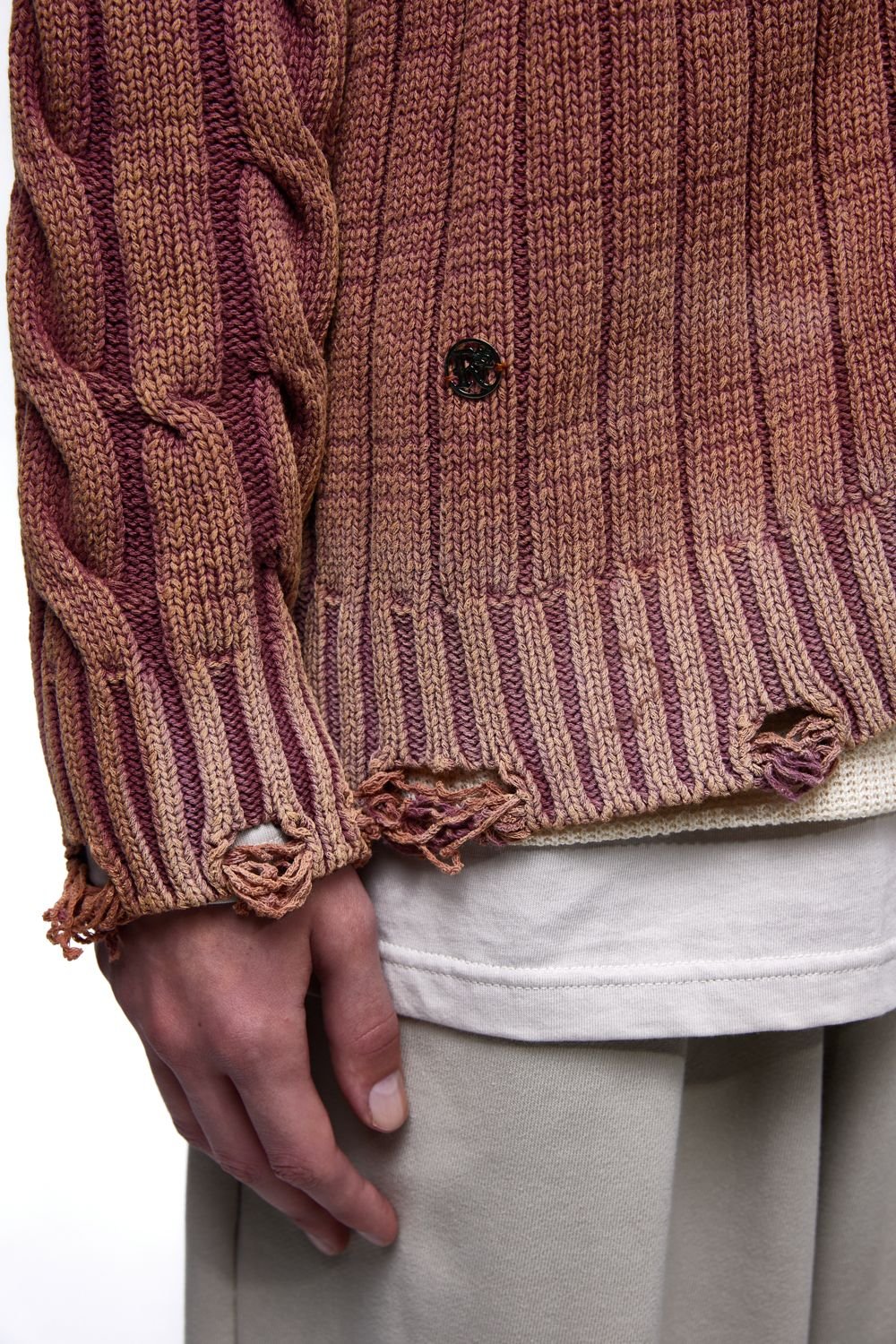
Acid washing knitwear is similar to denim washing — it requires meticulous control over temperature and chemicals.
- The problem: Wool and cotton yarns are more fragile than denim. You want that mottled, worn-in fade, but push the wash too long and you’ll end up with holes.
- Shrinkage: Any sweater that goes through aggressive washing will have a different shrinkage rate from an untreated one. A factory that knows its craft will run multiple test samples before bulk production to lock in the final measurements.
Holes and Destroyed Effects
Worn edges, collars, or cuffs come from manual yarn cutting or intentional needle-dropping on the machine. Yarn twist is critical here — too loose, and the entire garment can fall apart.
4. Intarsia vs jacquard: two ways to knit a picture
Both techniques put a picture into a knitted panel. The difference is how the yarns behave behind the picture. Cable sits on a different axis — texture rather than image. That comparison is in cable knit vs jacquard.
Jacquard knits the whole panel with multiple yarns carried across the row — that’s float jacquard. Every needle is fed from a yarn supply, and the program decides which color shows. The pattern is built everywhere at once, so it can hold repeating motifs edge to edge and handle more colors per row. The trade-off sits on the back: the unused colors travel across as floats.
Intarsia knits separate color blocks with individual yarn supplies. Each yarn runs inside its own block, stops at the color boundary and turns back. Nothing travels behind the pattern, so there are no floats. The panel keeps an even weight and stretch across the whole width, and the back stays clean. The limit is that intarsia suits large, bold, non-repeating shapes and fewer colors — it’s built for blocks, not for line art.
The reverse is where buyers notice it first. Jacquard shows floats behind the motif, which can be visible on a light or open knit and can catch on jewellery or buttons. Intarsia shows a neat back, with color blocks meeting along a joined line.
| Jacquard | Intarsia | |
|---|---|---|
| Yarn behaviour | Yarns carried across the row | Separate supply per color block |
| Back of the panel | Floats behind the motif | Clean, no floats |
| Color count | Higher — more colors per row | Lower — each color adds a supply |
| Best motifs | Repeating, all-over, small to medium | Large, bold, non-repeating shapes |
| Weight and stretch | Floats can add weight and pull the stretch | Even across the panel |
| Yarn use and waste | Float yarn is hidden but still consumed | Extra yarn lengths per block, cut and joined |
| Gauges that suit it | Mid to fine, detail needs smaller stitches | Mid to chunky, where blocks stay readable |
| Typical use | All-over pattern, logo repeats, knit-in graphics | Big front graphics, color-block panels, statement shapes |
On yarn consumption, both waste more than a plain knit, but for different reasons. Jacquard burns yarn in the floats — it’s knitted, then hidden. Intarsia uses a separate length per block, and those lengths get cut and joined, so there’s more handling and more offcuts.
Gauge matters too. Fine detail needs small stitches, which points jacquard at mid-to-fine gauges. The coarse-to-fine split across the whole range is mapped in fine gauge vs heavy gauge knitwear. Intarsia reads best at mid-to-chunky gauges, where a big shape holds its edge cleanly and the join line sits inside the texture.
5. How to brief intarsia or jacquard (and what drives the cost)
The brief looks different for each technique, and sending the wrong file is the fastest way to lose a week.
For jacquard, supply a clean chart or graphic with the color count locked. Reduce the artwork to the colors you’ll actually knit — don’t send a photo with hundreds of tones. Mark any repeating motifs and say where they sit on the panel.
For intarsia, supply a shape-based graphic. Think blocks, silhouettes and bold forms, not gradients. Accept upfront that the edges are knitted, not printed — an intarsia boundary is a row of stitches turning back on itself, so it has a slight step to it. A crisp diagonal in a design file won’t knit as a crisp diagonal unless the technician builds the shape to suit the gauge.
Cost drivers are shared, with one addition each. The shared ones: color count, motif size and placement, float management, programming time and test panels. Long floats need to be tied down or they snag, and that tying is extra work on the machine. The intarsia-specific one is the number of separate supplies — every block needs its own, so twenty small shapes cost more to knit than three large ones at the same total area.
Both are programmed work, and both need a test panel before bulk. The first panel tells you whether the floats lie flat, whether the blocks line up and whether the colors sit where the artwork said they would. Skipping it pushes the risk into bulk, where it’s expensive to fix.
One rule holds for both: a design with too many colors or hairline detail will be simplified or refused. A single stitch carries one yarn, so you can’t stack four shades inside it, and a one-row-wide line won’t read at chunky gauges. Send artwork that respects the stitch size, and the sample comes back close to the drawing.
6. Advice for Brand Owners
Don’t just compare prices. When you send an inquiry to a factory, be crystal clear on these three things:
- Describe the texture you’re after. Tell them the yarn composition and hand feel. If you want that fine, refined touch of 2/48Nm, say so outright.
- Send a reference sample. Even a piece from another brand beats a PDF. A technician can read collar details and wash color off a physical sample in ways a flat design file never can.
- Budget time for trial and error. If your design involves plating or acid washing, the first sample will take longer. Leave room for sizing adjustments and dialing in the wash intensity.
From yarn to finished piece, this supply chain runs on precision. Speak the technical language and you’ll move faster with the factory — and your product will sit on a foundation that competitors will struggle to copy.