
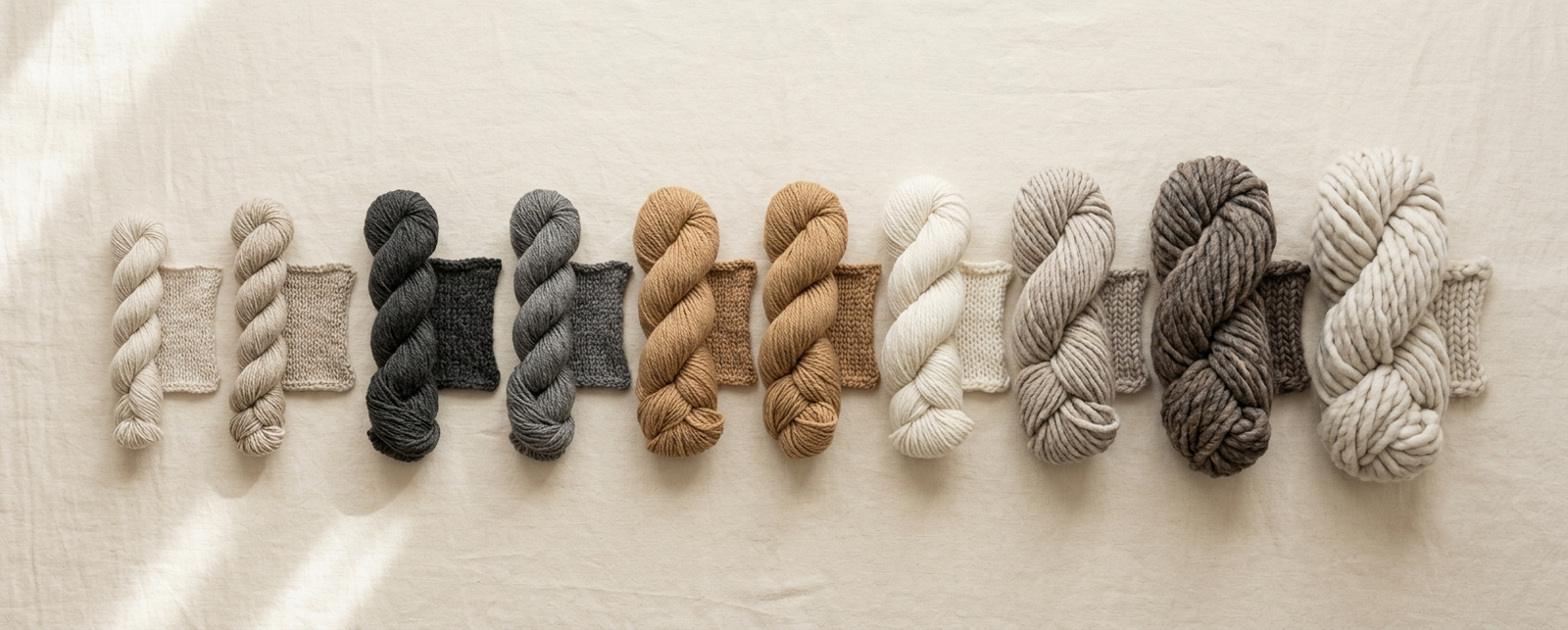
If you’re a brand buying cardigans from a knitwear manufacturer, the first question is always the same — what yarn? The yarn defines the gauge, the gauge limits the machine, and the machine determines your unit cost. Here are the 10 most common cardigan yarns, ranked by fineness, with the data you need to write a production spec.
1. superfine merino wool (2/48Nm to 2/80Nm, 14-16gg)
The default for fine-gauge luxury cardigans. Superfine merino sits at 17.5 micron and below — fine enough that it doesn’t itch like standard lambswool. If you are weighing the two fibres, merino wool vs lambswool breaks down micron, loft and cost. It drapes well, takes dye evenly, and holds its structure in a sharp V-neck or collar shape better than cashmere.
What it is: Australian merino, super-wash treated, combed to a high twist. Yarn count runs 2/48Nm up to 2/80Nm.
Brand reference: Loro Piana uses superfine merino for their Travel Storm System cardigans.
What it doesn’t do: It pills without super-wash treatment. Adding anti-pilling treatment costs about 15-20% more on the yarn.
Typical cardigan weight: 300-400g finished.
2. cashmere (2/28Nm, 14gg)
The standard for any cardigan retailing above $300. Cashmere at 14gg is the sweet spot — fine enough to drape, open enough to trap air for warmth. Most luxury cashmere cardigans run 2/28Nm carded cashmere at this gauge.
The hidden spec: Pure cashmere has nearly zero stretch recovery. A 100% cashmere cardigan bags at the elbow after a few wears. Every major luxury brand fixes this with a 5-10% nylon or silk blend. If a “100% cashmere” cardigan holds its shape, it isn’t 100%.
Brand reference: Loro Piana and Brunello Cucinelli run the largest cashmere cardigan programs in luxury.
Dye lot: Cashmere typically requires minimum 50kg dye lots. Blended yarns can drop to 25kg.
3. fine cotton (2/80Nm+, 16gg)
The summer cardigan material. Combed long-staple cotton (Egyptian or Supima) at 16gg gives a crisp, flat fabric that breathes and washes well. The yarn is gassed and mercerized for a smooth, almost silky surface.
Best use: Summer cardigans, air-conditioning layers, relaxed fits. Works well with manual linking at the shoulders — machine-knitted panels with hand-finished seams.
Brand reference: Ralph Lauren Purple Label runs cotton cardigans at this gauge.
Yarn consumption: 200-280g per adult cardigan at 16gg.
4. wool-silk blend (70/30 or 80/20, 14gg)
The dress cardigan option. Adding 20-30% filament silk to merino base gives noticeable luster and added tensile strength. A 70% merino / 30% silk cardigan at 14gg has the sheen of real silk at a fraction of the cost.
The catch: Silk has low elasticity. You need at least 800 tpm (twists per meter) on a 2/48Nm base, or the cuffs and hem won’t recover. This limits which mills can spin it.
Blended yarn lead time: Standard 6-8 weeks for custom spinning, plus 2-3 weeks for the blend.
5. standard merino wool (2/28Nm to 2/36Nm, 7-12gg)
The workhorse for mid-range cardigan production. About 80% of cardigan orders run in this range. 9gg merino with a 2/28Nm yarn gives a balanced fabric — not too open, not too dense.
Why it works: Fast to knit compared to fine gauge. Stitch definition is clean. Cost is predictable and stable. A 9gg merino cardigan uses about 350-450g of yarn and knits in 25-35 minutes on a flatbed machine.
Brand reference: Acne Studios and Cos use standard merino for their core cardigan shapes.
6. lambswool (22-24µ, 7-12gg)
The budget king of mid-gauge cardigans. First shear of a sheep (6-7 months old), softer than regular wool but coarser than merino at 22-24µ. It can still itch on sensitive skin.
Production issue: Lambswool shrinks if machine-dried. If your customer is US-based, spec super-wash treatment — most American consumers machine-wash everything.
Cost index: 0.6x vs merino (merino = 1.0x). It’s cheap, resilient, and predictable.
7. baby alpaca (22µ, 9-12gg)
Warmer than wool, lighter, and hypoallergenic. Baby alpaca (first shearing) has almost no lanolin, so it doesn’t trigger wool allergies. The fiber is about 22µ — similar to lambswool in fineness but hollow, which traps more air for the same weight.
Dye limitation: Baby alpaca has poor affinity with reactive dyes. Premetallized dyes hold better, but the color range is limited to 30-50 colors, versus 200+ for merino. Plan your color palette before writing the yarn spec.
Sourcing note: The Ayacucho region in Peru produces the best baby alpaca.
8. yak wool (18-20µ, 10-12gg)
The rising specialty fiber. Yak wool is about 18-20µ — softer than cashmere, warmer, and more pill-resistant. 10-12gg yak cardigans have a distinctive matte halo that luxury buyers recognize.
What to know: Yak costs more than merino but less than cashmere (roughly 3x merino). It dries slowly because it absorbs more moisture. Lead time is 6-8 weeks. Most mills only stock it in basic shades — beige, charcoal, black, brown.
Brand reference: Loro Piana sources yak from the Qinghai-Tibetan Plateau for their main cardigan line.
9. shetland wool (23-26µ, 5-7gg)
The heritage yarn for coarse-gauge cardigans. Shetland wool comes from Shetland sheep — naturally scratchy, very warm, extremely durable. It’s the traditional yarn for fisherman / Aran cardigans. At 5-7gg the texture is unmistakable.
The use case: A 5gg shetland cardigan uses 500-800g of yarn and knits slowly. You pay for the weight, but you get a garment that lasts years. Standard yarn for UK/Irish heritage brands.
Less suited for: Sensitive-skin markets (Japan, Korea). The scratch factor is real.
10. kid mohair (22-26µ, 5-7gg)
The fuzzy statement yarn. Kid mohair (first shearing of Angora goats) at 5-7gg produces a cardigan that’s light for its volume, fuzzy, and warm. Brushed kid mohair gives a distinctive halo that designers use for texture and color blends.
Brand reference: Prada runs loopy, fuzzy mohair cardigans. Acne Studios uses mohair regularly for seasonal collections.
Production warning: Mohair sheds. Brushed mohair sheds more. If your cardigan goes over dark shirts, spec a tight twist and minimal brushing. The brushing dust is also a workshop issue — you need separate brushing machines if the factory has dust-control requirements.
what the top 5 luxury brands use — quick reference
| Brand | Signature Cardigan Yarn | Typical Gauge | Retail |
|---|---|---|---|
| Loro Piana | Baby Cashmere, Yak, Superfine Merino | 14gg, 12gg | $1,500+ |
| Brunello Cucinelli | Cashmere, Superfine Merino, Wool-Silk | 14gg | $1,000-3,000 |
| Ralph Lauren Purple Label | Cashmere, Superfine Merino, Lambswool | 9-14gg | $500-1,500 |
| Prada | Mohair blends, Wool-Nylon | 5-12gg | $1,000-2,000 |
| Acne Studios | Merino, Mohair, Chunky blends | 3-12gg | $300-800 |
quick-reference table — all 10 yarns
| # | Yarn | Micron | Gauge | Cost Index | Dye Lot Min | Main Risk |
|---|---|---|---|---|---|---|
| 1 | Superfine Merino | ≤17.5µ | 14-16gg | 1.0x | 10kg | Pilling |
| 2 | Cashmere | 14-16µ | 14gg | 4-5x | 50kg | Bagging, Pilling |
| 3 | Fine Cotton | — | 16gg | 0.7x | 10kg | Wrinkles |
| 4 | Wool-Silk | 17.5-19µ | 14gg | 1.5x | 25kg | Twist Spec |
| 5 | Standard Merino | 17.5-19µ | 7-12gg | 1.0x | 10kg | Pilling |
| 6 | Lambswool | 22-24µ | 7-12gg | 0.6x | 25kg | Shrinkage |
| 7 | Baby Alpaca | 22µ | 9-12gg | 2.5x | 25kg | Limited Dyes |
| 8 | Yak Wool | 18-20µ | 10-12gg | 3x | 30kg | Slow Drying |
| 9 | Shetland Wool | 23-26µ | 5-7gg | 0.8x | 25kg | Scratch Factor |
| 10 | Kid Mohair | 22-26µ | 5-7gg | 2x | 25kg | Shedding |
what this means for brands and designers
Gauge determines everything. A 3gg cardigan can’t use 2/80Nm merino — the machine bed can’t hold it. The coarse end of the range is compared in 3GG vs 7GG knitwear. Pick your gauge first, then your yarn. Most factories cover a limited gauge range. Fine 14gg and chunky 5gg usually means two different factories.
Fine yarns add lead time. Superfine merino and cashmere at 2/60Nm+ may need custom spinning — 6-8 weeks from the mill. Blends add 2-3 more weeks. If your launch date is fixed, pick a stocked yarn color from the mill.
Don’t spec 100% of any natural fiber if shape retention matters. The “100% cashmere” label is often 95/5 or 90/10 with nylon or silk. This isn’t cheating — it’s necessary. Plan 5-15% of a structural fiber in your spec.
Yarn sourcing is separate from garment production. Eastern factories buy from the same spinning mills that supply luxury brands in Italy, Scotland, and China. The difference is finishing and QC. If you want Loro-Piana-level quality at a lower price, check who your factory buys from.
FAQ
1. what’s the best yarn for a men’s cashmere cardigan?
Pure cashmere at 14gg is standard, but spec a 5-10% nylon blend for shape retention. Use inner Mongolian or Hexi Corridor cashmere (Alashan cashmere) for consistent quality. Expect the cardigan to weigh about 300-400g finished.
2. do luxury cardigans use 100% natural fibers?
Most luxury cardigans include 5-10% nylon or polyamide for durability, even when labeled otherwise. It’s standard practice. If shape retention matters to your customer, spec the blend openly.
3. what’s the difference between 14gg, 9gg, and 5gg cardigans?
Gauge = stitches per inch. 14gg is fine (dress shirt feel), 9gg is mid-weight (standard cardigan), 5gg is chunky (visible stitches). The whole spectrum is mapped in fine gauge vs heavy gauge knitwear. A 14gg cardigan uses about 300-400g of yarn. A 5gg cardigan uses 500-800g.
4. how do I choose a yarn supplier for cardigan production?
Start with your target gauge. It limits the yarn count. Then match the fiber to your retail price point — merino for mid-range, cashmere or yak for luxury, lambswool or cotton-acrylic for value. Ask the factory what they stock before designing. Custom spinning adds 6-8 weeks.
5. can I make cardigans from yak wool?
Yes. Yak wool at 10-12gg produces a cardigan softer than cashmere with a matte finish. Limited color range (basic shades only), longer lead time (6-8 weeks), and runs warm — not for lightweight cardigans. Same supplier base as Loro Piana’s yak program.