

OEM vs ODM in knitwear manufacturing: what’s the difference, and which one do you actually need?
If you’re a brand owner or designer sourcing knitwear from China, you’ve seen these two acronyms everywhere. But in practice, the line between OEM and ODM isn’t always clear — and factories don’t always explain it well.
Here’s the short version:
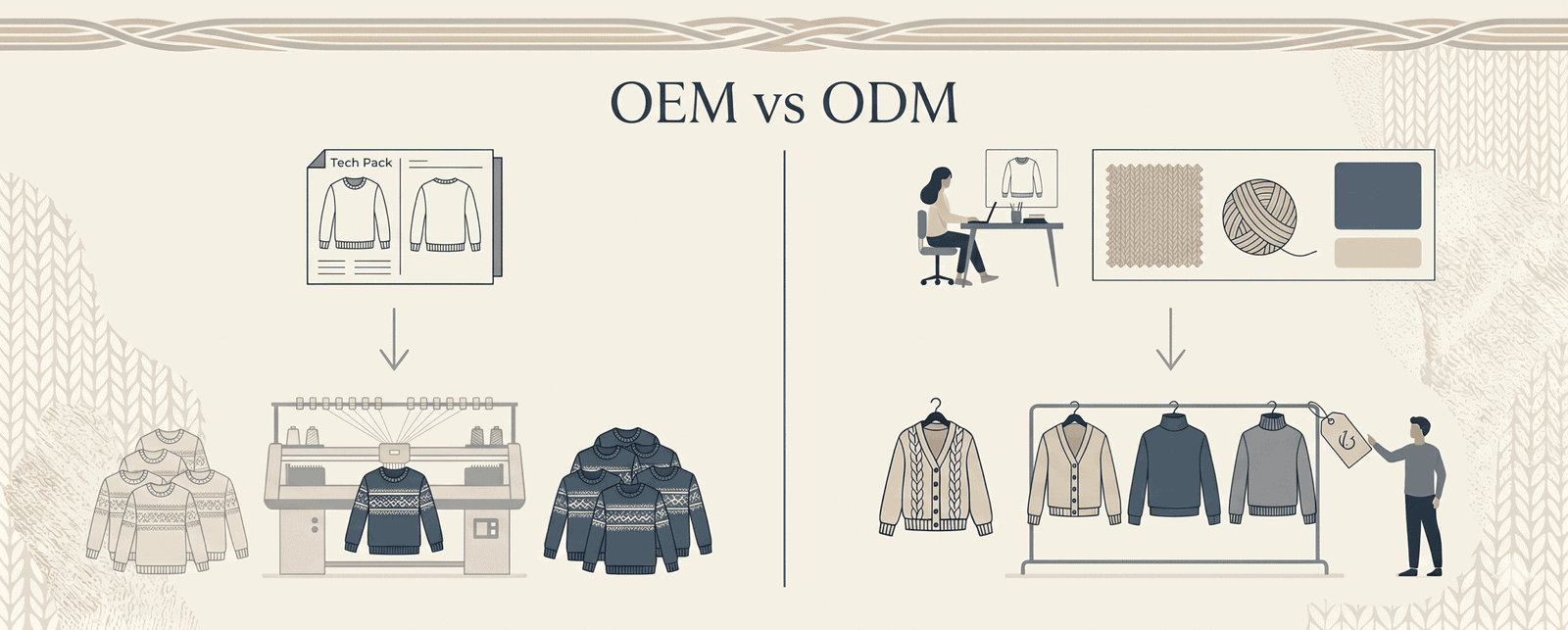
OEM (Original Equipment Manufacturing) = you bring the design, the factory makes it.
ODM (Original Design Manufacturing) = the factory has a design, you pick it (maybe tweak it), and they make it.
That’s it. But the real difference isn’t the acronym — it’s who owns the spec, who takes the risk, and what that means for your brand.
Let’s walk through both models with real knitwear examples.
1. OEM: you design, they make
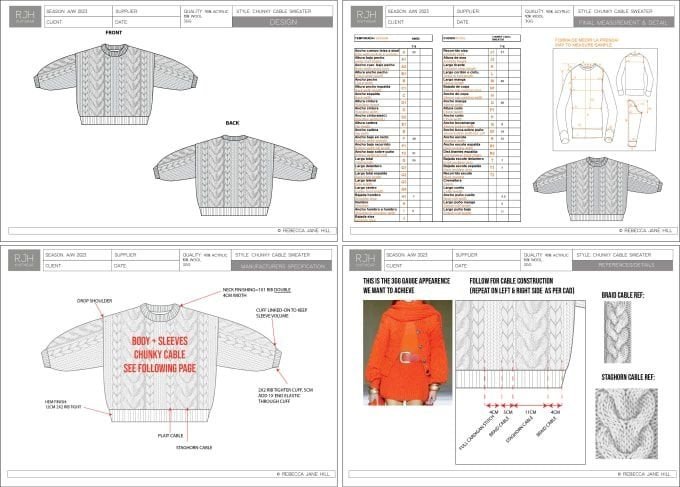
In OEM, the brand owns the design completely. You provide:
- A tech pack (flat sketch + measurement spec + construction notes)
- Yarn specification (fiber composition, yarn count, twist level)
- Trim details (buttons, zippers, labels)
- Size grading requirements
The factory’s job is to execute. They don’t change your design unless they spot a production issue (and a good factory will flag those — more on that later).
Knitwear example: You’re a streetwear brand launching a 7-gauge chunky wool crewneck. You’ve designed a specific dropped shoulder, a 2×2 rib cuff at a particular compression ratio, and a custom neck tape. You send the spec pack to Lewen Garment, they make a sample, you approve it, they produce 800 units.
What this means in practice:
- You control the IP — that design is yours. The factory can’t sell it to another brand.
- You need design capability — if you can’t produce a proper tech pack, OEM will be painful.
- Longer development — expect 2-3 rounds of sampling before bulk approval.
- Higher MOQ per SKU — factories need to set up machines, order specific yarns, and run production lines. 300-500 pieces per color per style is typical for 7/12-gauge sweaters.
- Cost is higher per unit — smaller batches, custom yarns, more sampling rounds.
Who OEM works for: Brands with in-house design teams, established labels expanding into knitwear, and designers who need precise control over their product.
2. ODM: pick a design, brand it
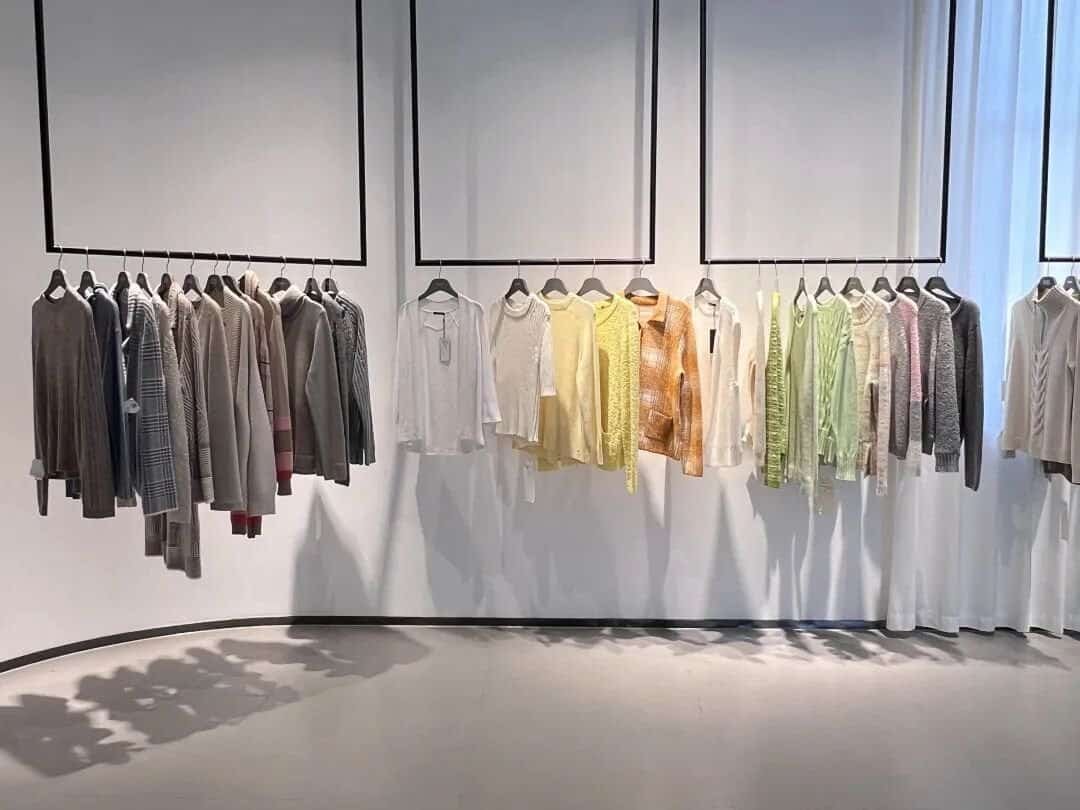
In ODM, the factory shows you what they already make (or have the capability to make) and you choose from their options. You can usually request modifications — change the color, swap a yarn, alter the neckline — but the core design belongs to the factory.
Knitwear example: You’re a mid-tier womenswear brand looking to add a 12-gauge cashmere-blend cardigan to your winter line. Lewen Garment has 30+ existing cardigan styles with proven production specs. You pick one, choose from 8 standard colors, ask for a V-neck instead of a crew, and the factory produces 200 pieces per color.
What this means in practice:
- Faster turnaround — no spec pack needed. Pick a style, modify 2-3 details, sample in one round (or skip sampling entirely if it’s a standard style).
- Lower MOQ — 100-200 pieces per color vs 300-500 for OEM. (eg: Both models require a MOQ of 100 pieces at Lewen Garments.) The factory already has the pattern, the yarn sourcing setup, and the machine program.
- Lower unit cost — standard styles use standard yarns the factory buys in volume.
- Less differentiation — another brand could pick the same base design. Your brand identity comes from fabric choice, color, trim, and packaging.
Who ODM works for: New brands testing a category, e-commerce sellers who need speed, retailers filling seasonal gaps, and anyone who doesn’t have a dedicated knitwear designer on staff.
3. The gray area: OEM-ODM hybrid
Most experienced knitwear factories operate in a gray zone that doesn’t fit neatly into either bucket. This is worth understanding because it’s usually the best option.
What this looks like:
- You have a general concept but no tech pack. The factory’s design team develops the spec based on your reference images and measurements.
- You pick a factory’s existing body style but fully customize the yarn, stitch pattern, trim, and size range.
- You provide a hand-drawn sketch and the factory drafts the pattern and writes the machine program.
This is essentially design-assistance manufacturing. The factory contributes design work, but you own the final product. Many Chinese sweater factories (including us) operate this way by default — especially with Western brands who have design direction but lack technical knitwear knowledge.
Why it matters: If a factory tells you “we only do OEM” or “we only do ODM,” they’re probably rigid or small. The best partners flex between both models depending on what you need.
4. Comparison table
| OEM | ODM | Hybrid | |
|---|---|---|---|
| Design source | Brand | Factory | Shared |
| IP ownership | Brand | Factory | Negotiable |
| Development time | 4-8 weeks | 1-3 weeks | 2-5 weeks |
| MOQ (per color) | 300-500 pcs | 100-200 pcs | 200-300 pcs |
| Unit cost | Higher | Lower | Mid |
| Best for | Established brands | Fast movers | Most brands |
5. What to ask a factory before you commit
Regardless of which model you’re targeting, ask these four questions early:
1. “Do you have a showroom or catalog of existing styles?”
If yes, you can move fast with ODM. If no, they’re set up for OEM only — expect longer lead times.
2. “What’s your sample policy for modified ODM styles?”
Some factories charge full sample fees for any modification. Others treat small changes as free. This matters when you’re comparing 3-4 factories.
3. “Can you source custom yarns at OEM-level MOQ?”
Not all factories have the supply chain relationships to order specialty yarns for small batches. If your design calls for a specific 2/48Nm merino blend, you need a factory that works directly with spinners, not just a wholesaler.
4. “Who owns the pattern after production?”
In ODM, the pattern stays with the factory. In OEM, it should be yours — but not all factories hand over the digital pattern files. Get this in writing.
6. What this means for your sourcing decision
If you’re reading this to figure out your own path, here’s the practical takeaway:
- No in-house designer → start with ODM. Pick proven styles, customize colors/trims, and build your brand around fabric and finishing quality.
- Have a designer but no tech pack experience → look for a factory that offers design-assistance (hybrid). You provide direction, they handle the technical side.
- Full design capability, established brand → OEM gives you control, but only if the factory is competent at your gauge and construction type. Vet their production samples, not just their sales pitch.
And if you’re somewhere in between — which is most brands — don’t worry about the label. Find a factory that can do both, and let the specific project decide which model fits.
FAQ
What’s the difference between OEM and ODM in knitwear?
OEM means you bring your own design and the factory produces it. ODM means the factory has its own designs and you choose from their catalog (with possible modifications). The key difference is who owns the design — in OEM it’s you, in ODM it’s the factory.
Is ODM cheaper than OEM for sweaters?
Generally yes. ODM uses the factory’s existing patterns, machine setups, and standard yarns, which means lower MOQ and lower unit cost. OEM requires custom machine programming, potentially custom yarn orders, and more sampling — costs that get passed to the buyer.
Can I own the design if I use ODM?
No — unless you negotiate a separate agreement. ODM designs belong to the factory, and they may sell the same style to other brands. If you want exclusivity, expect to pay a development fee or switch to OEM.
What’s the minimum order quantity for OEM knitwear?
Typically 300-500 pieces per color per style for 7/12-gauge sweaters. Fine gauge (14-18gg) can go lower at 200-300. Chunky knits (3-5gg) usually need 500+ because they consume more yarn and machine time.
Do most Chinese sweater factories do both OEM and ODM?
Many mid-to-large factories offer both. Smaller specialized factories tend to stick to one model. The key is finding a factory that’s honest about their strengths — a factory that says “we do everything” often does nothing particularly well.