
July 27, 2026 — Google search data shows “knitwear trends 2026 winter” and “mens knitwear trends 2026” ranking high alongside B2B searches like “custom sweater manufacturer” and “custom knitwear manufacturer.” That is a clear signal: brands are looking for what to make and who to make it with. Here is what the trends are saying and how to turn them into actual production specs.
1. What is trending: the search data
Google suggest trends for 2026 confirm three clear directions in mens knitwear:
- Fine-gauge knits — 12 to 16 gauge. Lighter, more refined, works for layering.
- Relaxed cardigans — open-front, shawl-collar, wider fit. Not your grandfathers cardigan.
- Merino and merino blends — natural fiber with good warmth-to-weight ratio. The top material search for fall/winter.
What people are searching for
| Search term | What it tells us |
|---|---|
| mens knitwear trends 2026 | Active consumer and B2B interest |
| knitwear trends 2026 winter | Seasonal planning in progress |
| knitwear trends 2026 fall | Fall and winter both trending |
| custom sweater manufacturer | B2B — sourcing intent (strong) |
| custom knitwear manufacturer | B2B — sourcing intent |
| knitwear manufacturer china | B2B — geographic supplier search |
| merino wool sweater | Material-specific — consumer and B2B |
| custom cardigan manufacturers | B2B — cardigans are hot |
| custom hoodie manufacturer | Streetwear crossover |
The B2B searches — “custom sweater manufacturer,” “custom knitwear manufacturer,” “custom cardigan manufacturers” — all point to the same thing: brands have the ideas, they just need the factory.
2. Trend 1: fine-gauge merino knits (12-16 gauge)
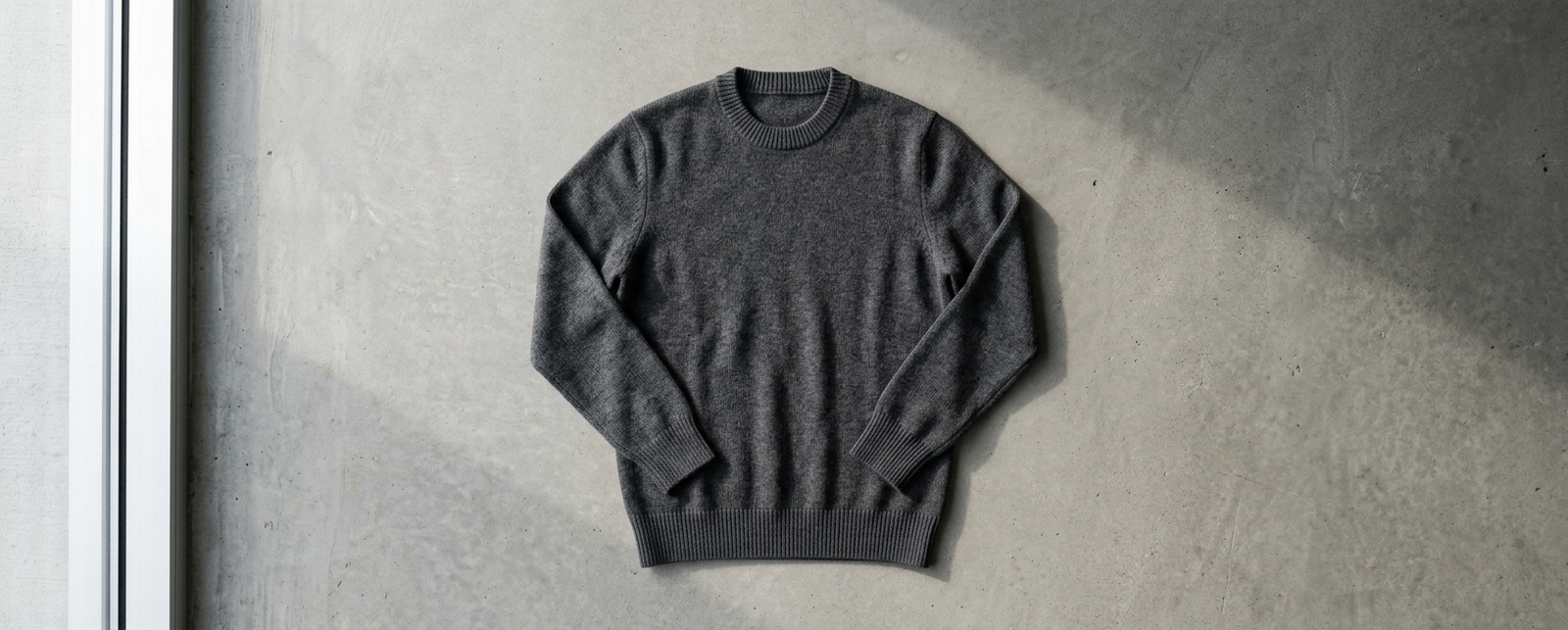
Fine-gauge merino is the biggest trend in mens knitwear for fall/winter 2026. It is not about chunky sweaters anymore — it is about lightweight, high-gauge pieces that work under a jacket or over a button-down.
Why fine-gauge works
A 12-16 gauge machine produces a tighter, smoother fabric. It is less bulky, drapes better, and feels more like a woven shirt than a traditional sweater. For brands:
- Layering — a fine-gauge merino crewneck or polo fits cleanly under a wool overcoat or blazer
- Year-round potential — fine-gauge knits work from early fall through spring
- Shipping costs — lighter garments mean lower per-unit freight
2/60 Nm merino: the spec to know
The yarn count for fine-gauge merino is typically 2/60 Nm (two-ply, 60 Nm per ply). It is a standard spec that most knitwear factories in China can run. The finished fabric has a hand feel close to a fine cotton jersey, with merinos natural temperature regulation and moisture-wicking.
Production considerations
- 12-gauge — the heavier end of fine. Good for open-front cardigans and polos that need some body
- 14-gauge — the sweet spot. Works for crewnecks, V-necks, and cardigans
- 16-gauge — the lightest. Best for t-shirt-style knits and layering pieces
- Fabric finish — enzyme wash or anti-pilling treatment for merino to prevent fuzzing
- Neck ribbing — use a tighter gauge (18-20 gauge) for collar and cuffs to maintain shape
3. Trend 2: relaxed cardigans — shawl-collar and open-front
The cardigan is having a moment. Not the slim-fit, button-up kind — the relaxed, open-front, shawl-collar version. It is showing up across streetwear and contemporary brands.
What makes a relaxed cardigan
- Shawl collar — wider lapels that fold over, not a traditional button-up collar
- Open front — no buttons, or minimal buttons. The silhouette is what does the work
- Extended fit — wider body, dropped shoulders, longer length
- Patch pockets — functional, adds visual weight to the lower half
Gauge and yarn choice
Relaxed cardigans work best in 7 to 12 gauge. The fabric needs enough body to hold the open-front shape without sagging.
- 7-gauge — chunkier, more structure. Good for a statement piece
- 9-gauge — mid-range. Balanced drape and body
- 12-gauge — on the lighter side. Works for a more refined relaxed cardigan
Yarn choice depends on the look. Merino gives a clean, premium hand. A wool-acrylic blend (60/40 or 50/50) gives structure at a lower cost point. For streetwear brands, a cotton-acrylic blend works — it is heavier, more like a knit jacket than a sweater.
Construction details
- Ribbed shawl collar — 1×1 or 2×2 rib, minimum 8 cm width
- Side slits — 4-6 cm openings at the side seams for movement
- Hem and cuffs — 1×1 rib, 4-5 cm length
- Buttons — if used, opt for 3-4 horn or resin buttons spaced 12-15 cm apart
- Dropped shoulders — shoulder seam extends 3-5 cm past the natural shoulder line
4. Trend 3: merino blends — the practical choice
Straight merino is expensive. A merino-acrylic blend (50/50 or 60/40 merino to acrylic) gives you most of the benefits at 30-40% lower yarn cost.
Why brands are blending
- Cost control — merino raw material prices have been stable but high. Acrylic brings the price down
- Durability — acrylic adds tensile strength and reduces pilling compared to 100% merino
- Shape retention — blended knits hold their shape better through repeated wear and washing
- Machine washable — merino-acrylic blends handle machine washing better than pure merino
What to specify
When sourcing a merino-blend yarn, spec:
- Fiber ratio — eg. 50% merino wool 50% acrylic (or 60/40)
- Yarn count — 2/48 Nm or 2/60 Nm for fine-gauge, 2/28 Nm for mid-gauge
- Pilling rating — ask for a fabric that tests at 3.5 or higher on the Martindale scale
- Color fastness — spec ISO 105-B02 lightfastness rating of 4 or better
- Finish — anti-pilling enzyme wash is standard. Also ask for a softener finish if the fabric feels scratchy
5. What this means for brands and designers
1. Gauge determines everything
Choosing 12-gauge vs 7-gauge is not a style preference — it changes the yarn spec, machine setup, fabric weight, and final hand feel. Pick your gauge first, then build the rest around it.
2. Merino-blend yarns need early sampling
Blended yarns are not off-the-shelf. Factories need to order the merino and the acrylic separately, then spin them at a mill. That adds 2-3 weeks to the yarn procurement timeline. Start sampling 4-6 months before your planned delivery.
3. Relaxed cardigans need prototype fit testing
An open-front cardigan with dropped shoulders and a shawl collar needs at least one fit sample. The collar can pull the front open if the weight distribution is off. Plan for 2-3 rounds of samples for cardigans.
4. MOQ reality check
Fine-gauge merino pieces: 100 pieces per design per color is the standard MOQ. Relaxed cardigans in a specialty blend: 200-300 pieces per design. If you need lower, ask about stock yarn colors — using a factory in-stock yarn reduces the MOQ to 80-100 pieces.
Lewen Garment has been producing mens knitwear since 2002 — fine-gauge merino, relaxed cardigans, and custom blends are what we do daily. If you are planning a fall/winter 2026 collection and need a factory that understands these specs, get in touch.
FAQ
What gauge is best for fine-gauge merino mens knitwear?
For fine-gauge knits, 12-gauge to 16-gauge is the standard range. 14-gauge is the most versatile — works for crewnecks, V-necks, and cardigans. 16-gauge is best for t-shirt-style layering pieces.
What is the typical MOQ for custom knitwear from a Chinese factory?
Standard MOQ is 100 pieces per design per color for fine-gauge merino pieces. Relaxed cardigans in specialty blends require 200-300 pieces per design. Using a factory in-stock yarn colors can reduce MOQ to 80-100 pieces.
What is the difference between 7-gauge and 12-gauge relaxed cardigans?
7-gauge produces a chunkier, more structured fabric — good for a statement piece. 12-gauge is lighter with more drape — better for a refined relaxed cardigan. Gauge choice affects machine setup, yarn spec, fabric weight, and final hand feel.
Why use merino-acrylic blend instead of 100% merino?
A merino-acrylic blend (50/50 or 60/40) cuts yarn cost by 30-40%, adds tensile strength, reduces pilling, and improves shape retention. It also handles machine washing better than pure merino.
How long does sampling take for custom knitwear?
Plan for 4-6 months before delivery. Blended yarns need 2-3 extra weeks for procurement (ordering merino and acrylic separately, then spinning). Cardigans with shawl collars need 2-3 rounds of fit samples.