

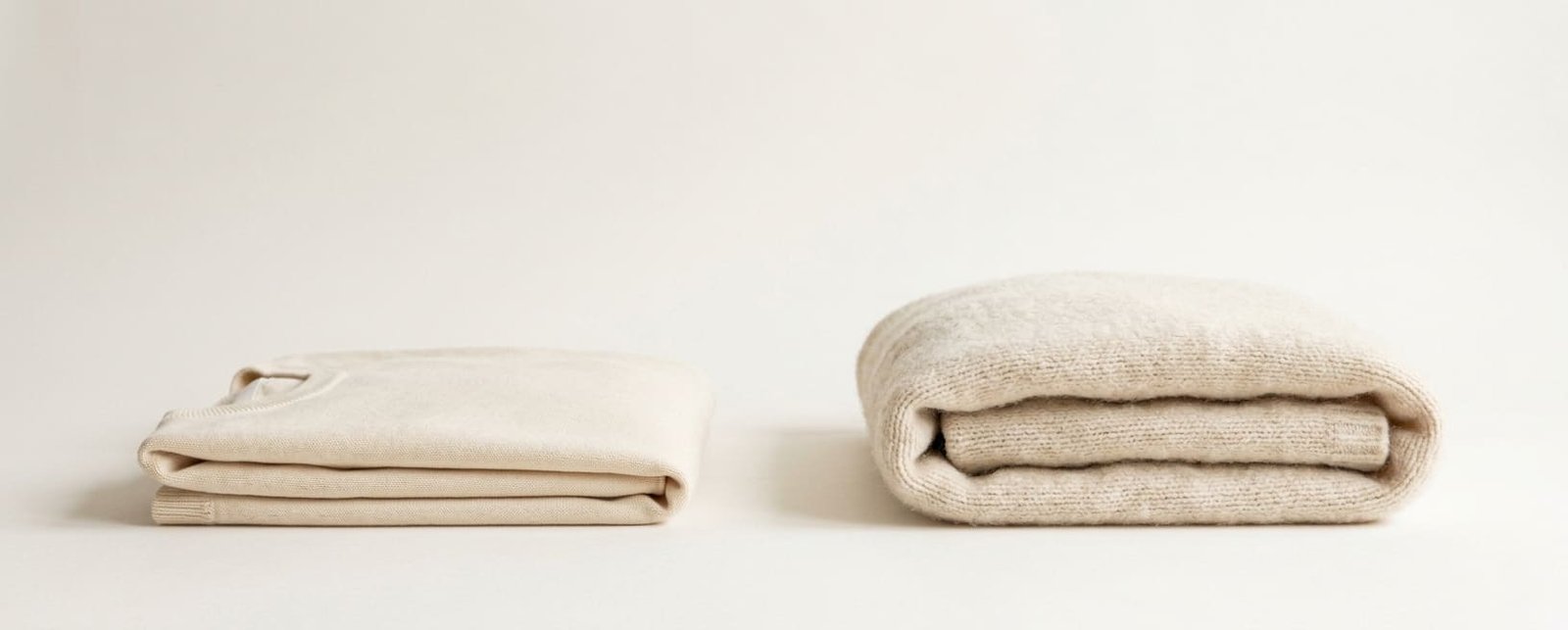
Cotton is the easier fibre to sell and to wear. It’s machine-washable, breathable, hypoallergenic in the everyday sense, soft against skin from day one, and cheaper per piece. It suits year-round knits, knit polos, layering pieces and brands that want simple care.
Wool does different work. Merino insulates better for its weight, regulates temperature, resists odour and holds shape with less bulk. It also costs more, needs a careful wash cycle, and coarse grades can itch.
Neither is better. They’re two performance profiles. Cotton competes on comfort, care and price; wool competes on warmth-to-weight, resilience and premium positioning. Most brands run both in the same collection, so the useful question is which one your product, customer and price band need.
Two words before the comparison. Sweater and jumper mean the same garment — sweater in the US, jumper in the UK and much of the Commonwealth — so everything below applies to both. And merino is a wool, not a separate fibre family, so “cotton vs merino wool” is this same decision with a specific wool grade attached.
what cotton and wool are at production level
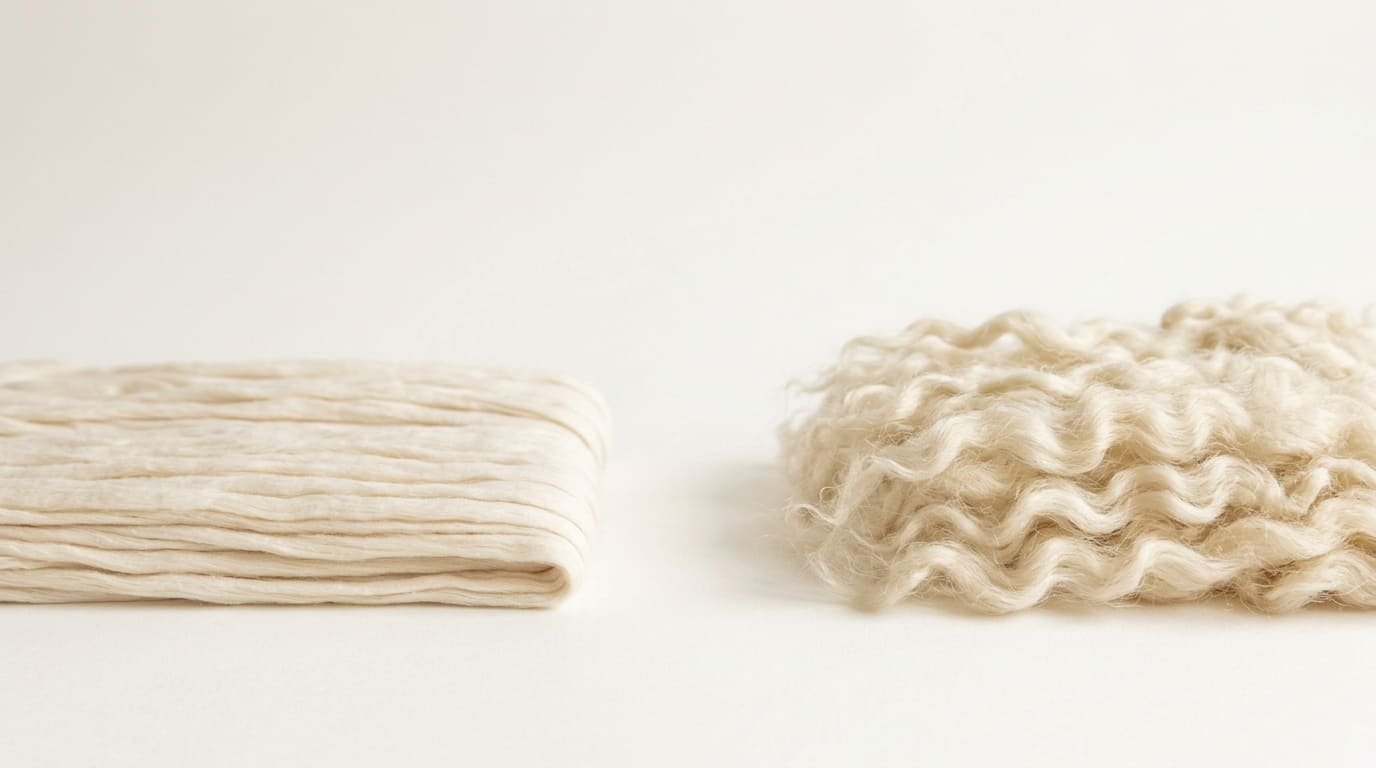
Cotton is a plant fibre, spun into yarn from staple fibres. The finished yarn is smooth, straight and predictable. It has no crimp for trapping air, so it builds warmth through fabric weight rather than loft. Wool is an animal fibre with natural crimp — the wave along each fibre — and overlapping scales. The crimp gives wool its loft, elasticity and insulation, because a wavy yarn traps far more air than a smooth one. The scales give the springy handfeel, and they’re also why wool felts in a hot wash.
Both arrive at the knitting floor as spun yarn, and behave differently from there: wool has more stretch and bulk, cotton has more weight and less recovery.
cotton vs wool knitwear: the comparison
| Cotton | Wool | |
|---|---|---|
| — | — | — |
| Warmth and insulation | Warm with weight — dense, no loft | Warm from trapped air; high warmth per gram |
| Breathability | High; smooth yarn lets air through | High; manages humidity as the wearer moves |
| Moisture handling | Holds water, dries slowly, feels wet and clings | Absorbs vapour into the fibre, keeps insulating when damp |
| Softness against skin | Soft from day one; smooth, cool, no prickle | Grade-dependent; fine merino soft, coarse grades dry |
| Itch potential | Low | Varies with fibre diameter; coarse grades itch |
| Shape retention | Moderate; cuffs and hems can stretch | High; crimp gives elasticity and recovery |
| Pilling and wear | Pills less, can look flat over time | Pills when short fibres work loose; good yarn limits it |
| Wash and care | Machine washable and forgiving | Hand wash or wool cycle, no dryer; untreated wool felts |
| Drape and weight | Denser and heavier for the same warmth | Lighter and springier; drapes with less weight |
| Seasonal fit | Year-round, strongest in spring/summer | Autumn/winter and the layers under it |
| Typical garments | Knit polos, summer sweaters, light cardigans | Winter sweaters, merino crewnecks, outdoor layers |
| Sustainability angle | Organic, BCI and recycled cotton routes | Recycled and mulesing-free wool sourcing |
| Cost position | Generally the lower-cost route | Higher per kilo, and fine merino higher again |
Every comfort advantage carries a care cost, and every performance advantage carries a price.
warmth: loft versus weight
Wool is warmer per gram because crimp traps still air inside the yarn. The air is the insulation, and a crimped yarn holds thousands of small pockets without extra bulk, which is why a light merino crewneck can be warmer than a heavier cotton sweater. Weight on the hanger tells you little: a cotton jumper and a wool jumper in the same size can weigh the same and still insulate differently.
Moisture changes the picture. Wool absorbs vapour into the fibre core without collapsing the structure, so it keeps insulating while it’s slightly damp. Cotton soaks up water, the air pockets fill, and the fabric insulates less while wet and feels clammy as it dries.
For costing, the gap shows up in grams per piece. A plain cotton crewneck usually needs more yarn weight than a merino crewneck to reach the same warmth. Grams per piece is a spec field the factory confirms against gauge, stitch and fit, not a fixed number you can assume from fibre alone. Loft changes the fit too: a lofty wool knit takes more width out of the pattern than a flat cotton one at the same measured weight.
care is a product decision
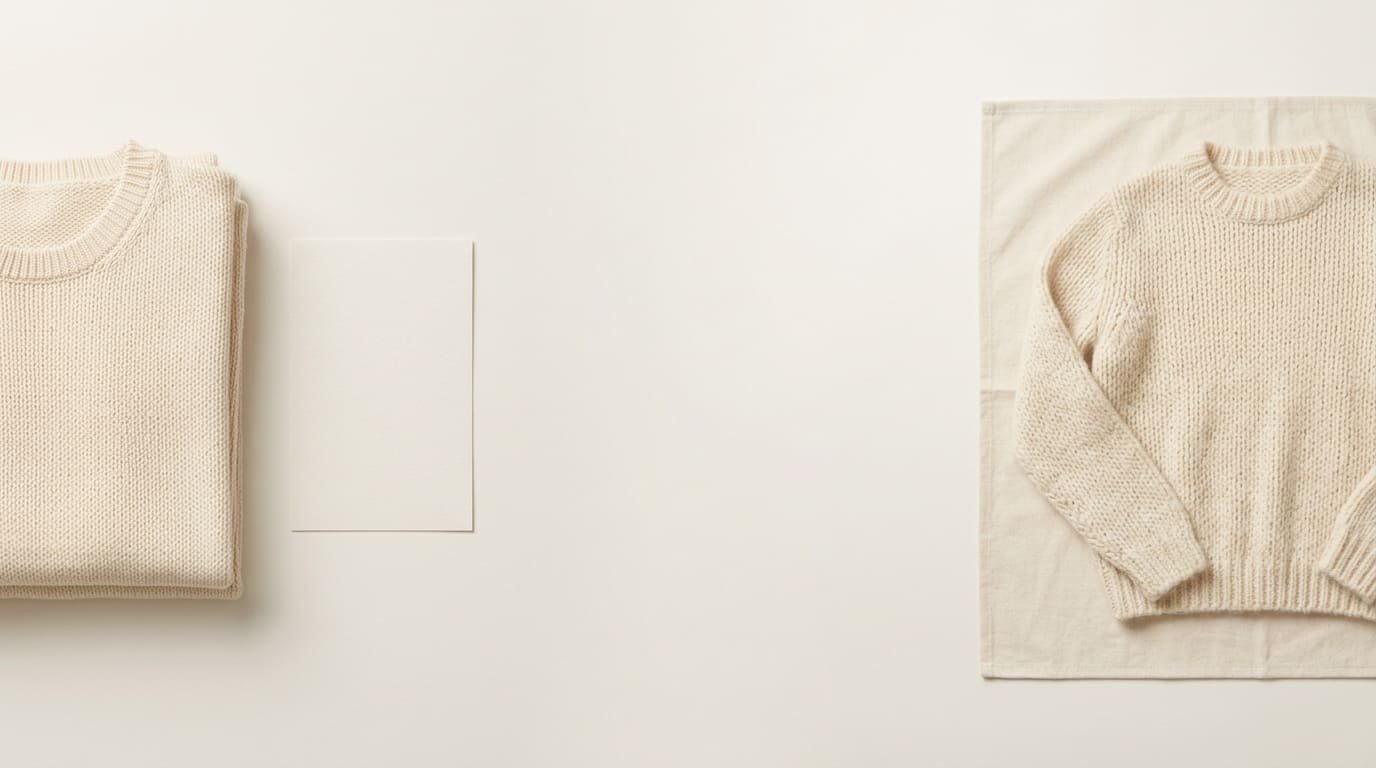
Cotton is machine-washable and forgiving. The customer can wash it with the rest of the load, and a normal dry cycle isn’t a disaster. That matters in casual ranges where ease of care sits high in the buying decision.
Wool usually needs hand washing or a wool cycle, cool water and careful drying — flat, away from heat, never in a hot dryer. Untreated wool felts when heat and agitation lock the fibre scales together. Superwash-treated wool survives a machine cycle, and for many brands that treatment is what makes wool viable for a mainstream customer. It costs more and shifts the handfeel, so compare treated and untreated swatches.
Care shapes the brief before it becomes a label. Cotton can sit in an everyday programme where convenience sells the product. Wool sells on warmth, quality and longevity, and a customer who pays for merino will accept a careful wash. Put a wool care label on a cheap, high-turnover knit and the returns come back wet and small.
comfort and skin feel
Fine merino reads soft and non-itchy. Fibre diameter decides that, not the word “wool” on the label. Merino fibres bend against skin instead of poking it. Coarser grades — the hardy yarns behind heavy outdoor knits — have stiffer fibres that don’t bend, which is where the classic itch comes from. It’s a grade issue, not a wool issue.
Cotton feels smooth and cool with no prickle. The trade-offs are weight and spring: it sits heavier on the body and doesn’t bounce back like wool, so a fitted shape can feel flatter over time. Blending softens both sides. A cotton/viscose blend adds drape and a cooler handfeel, and a cotton/wool blend lands between the profiles — more warmth and spring than pure cotton, less prickle and cost than pure wool.
shape retention and durability
Wool’s natural elasticity helps the garment recover. Crimp and scale structure let the fibre stretch and return to shape, so ribbed trims, necklines and hems hold their tension. That recovery is part of why wool garments cost more and still sell: the garment looks right in year two.
Cotton has almost no elastic recovery. Cuffs and hems on a 100% cotton knit can stretch out over months of wear, especially at the elbow and front hem where the fabric stays under load. A small elastane addition, typically in the low single digits, gives the rib enough recovery to hold shape, and a little nylon does a similar job in finer structures. That’s why “100% cotton” and “cotton-rich with a touch of elastane” are two different products at the same price point. In premium wool programmes, 5–20% nylon lifts abrasion resistance where the garment wears first.
cost position
Cotton is generally the lower-cost route. Wool costs more per kilo, and fine merino costs more still — on a medium crewneck the wool yarn alone can run several times the cotton yarn cost. In broad industry terms, cotton yarns commonly sit in the low single-digit dollars per kilo, standard wool sits above that, and fine merino sits well above standard wool and moves with micron and spin quality. Those are industry bands, not Lewen prices. Performance knitwear ex-factory pricing usually sits in a broad band per piece too: an accessible band for a cotton crewneck, premium bands for a fine merino style.
Two things stop cotton from always being the cheaper garment. Cotton needs more yarn weight to reach the same warmth, and more yarn costs more. Yarn is also only one line in the quote — construction, gauge, trims, colour count and quantity all move the number, and a cable-heavy cotton jacquard can cost more than a plain merino crewneck. A real figure needs a locked spec, and Lewen quotes per project after reviewing yarn, gauge, construction, trims, colour count and quantity.
the sustainability angle, kept short
Cotton and wool both carry sourcing questions into the brief now. Buyers ask about organic and BCI cotton routes, and about recycled and mulesing-free wool. The answer that holds up is a document, not a claim, so confirm the yarn supplier can support your label before the spec is frozen.
when to choose cotton
Choose cotton for year-round knits and long selling seasons, knit polos and shirt-like styles, summer and transitional programmes, layering pieces that sit under a jacket, easy-care positioning, budget-conscious first runs, and customers who avoid animal fibres.
when to choose wool
Choose wool for winter and cold-weather performance, premium and outdoor positioning where warmth-to-weight is the selling point, odour resistance and temperature regulation, garments that have to hold shape over a long life, fine-gauge merino where a refined handfeel justifies a higher price, and base layers worn close to skin.
blends as the third answer
Blends fix a specific problem instead of picking a side.
- Cotton/wool — the bridge fibre. Cotton softens the price and the care story; wool adds warmth and spring. Common ratios run from 50/50 to a wool-minority mix. It suits transitional knitwear and brands that want wool performance without a full merino price.
- Cotton/viscose — fixes cotton’s weight and dry hand. Viscose adds drape, a cooler touch and richer colour, which suits summer knits, fine cardigans and polished layering pieces.
- Wool/nylon — fixes durability and recovery. A low nylon percentage lifts abrasion resistance at cuffs, hems and elbows and helps the wool keep shape, which matters most in fine-gauge merino.
A wool-rich blend can deliver much of the merino handfeel at a lower yarn cost than 100% fine merino. It changes the label claim, so decide the composition before the price conversation.
a short decision framework
Seven questions settle most fibre choices.
- Season — summer, winter, or both?
- Target retail price — what does the band support after yarn, make and margin?
- Care story — can this customer hand wash, or does the product promise a machine wash?
- Fibre preference — does your customer buy wool, avoid animal fibre, or not think about it?
- Warmth-to-weight — is warmth per gram a selling point, or is the piece a layer?
- Handfeel — soft and cool, or springy and warm?
- Reference garment — what weight, stitch and surface are you matching?
If two answers conflict, say so in the brief. A machine-wash requirement and 100% untreated wool can’t both hold, and neither can a summer launch and a heavy wool handfeel. A blend, a superwash treatment or a gauge change fixes part of it, but only if the conflict is visible before sampling.
yarn notes at decision level
Fibre choice and gauge interact. Cotton has no crimp, so it holds stitches and tension differently from a springy wool yarn, and the same count doesn’t knit the same way across both. Wool recovers after knitting and gets bulk from crimp, so it reaches a fuller handfeel at finer counts. The fibre narrows the range of counts that knit cleanly, and the count narrows the gauge. Read how gauge works alongside our yarn count and machine gauge matching guide before you fix a fibre. Changing fibre later often means a new count, a new gauge and a reworked pattern.
sampling advice
If the fibre is new to your brand, start with a yarn swatch. Ask for the count, composition and micron or grade, then feel it, check the colour, and wash the swatch the way you expect your customer to. A swatch answers the two questions a tech pack can’t: does this feel right, and does it survive the care routine?
Then move to the sample. Describe the handfeel and care requirement you want — “soft, cool and machine-washable,” or “light, warm and dry-clean only” — and let the factory recommend the composition that hits it. Naming a composition too early can lock you into a heavier or pricier yarn than the product needs. Use our knitwear manufacturer checklist to sort your spec and approvals first.
where Lewen fits
Lewen Garment works with 100% cotton, cotton blends, viscose blends and wool routes, and knits from 1.5GG to 18GG in Dongguan, Guangdong. The tech team can advise on composition for the handfeel and price you’re targeting, and flag where a fibre choice pushes the gauge, yarn weight or care story somewhere you didn’t plan.
Both routes have dedicated fabric pages: Merino wool for the fine wool side and premium cotton knitwear fabric for cotton. If you’re weighing the two against a price target, the custom knitwear manufacturing cost breakdown walks through what moves a quote.
FAQ
Which is warmer, cotton or wool?
Wool is warmer for its weight. Natural crimp traps air inside the yarn, so a light merino sweater can outperform a heavier cotton one. A thick cotton knit can still be warm, but it needs more fabric weight and loses insulation while it’s wet.
Is cotton or wool better for a sweater?
Neither is better. Cotton suits washable, breathable, year-round knits and knit polos at a lower cost. Wool suits winter warmth, premium positioning and garments that need to hold shape for years.
Can a wool sweater be machine washed?
Untreated wool can felt and shrink in a hot wash, so it usually needs hand washing or a wool cycle in cool water. Superwash-treated wool is made to survive a machine wash, and it adds cost to the yarn.
Why are wool sweaters itchy?
It’s fibre diameter. Coarse wool fibres are stiff and don’t bend against skin, so they prickle. Fine merino fibres are thin enough to bend, which is why good merino feels soft. Cotton fibres are smooth and flexible, so they don’t prickle at all. If a wool sweater itches, the grade is the problem, not the fibre.
Is a cotton or wool sweater cheaper to produce?
Cotton is generally the lower-cost route and wool costs more per kilo, with fine merino highest. The final number depends on yarn, gauge, construction, trims and quantity, so a spec-heavy cotton knit can cost more than a plain merino crewneck. Lewen quotes per project after reviewing the spec.
Is cotton yarn good for sweaters?
Yes, for the right product. Cotton makes washable, breathable, year-round sweaters, knit polos and layering knits, and it’s the lower-cost route. What it won’t do is match wool’s warmth-to-weight: a cotton sweater needs more fabric weight to feel warm, and it loses insulation when it gets wet. For spring/summer programmes and easy-care positioning, cotton is a strong choice.
Cotton vs merino wool — which should brands choose?
Merino is a wool, so this is the same decision with a specific grade attached. Merino is finer, softer against skin, warmer for its weight and costs more per kilo. Choose cotton for price, washability and all-season comfort. Choose merino when warmth-to-weight, next-to-skin softness and premium positioning are selling points. Many brands run both and use a blend where the two requirements meet.
If you’re choosing between cotton and wool for an upcoming style, send Lewen your reference garment or tech pack and we’ll review the fibre, composition and gauge against your target handfeel and price. Lewen Garment is a custom knitwear manufacturer in China working from 1.5GG to 18GG, with low MOQs around 100 pieces per style as a working reference.