

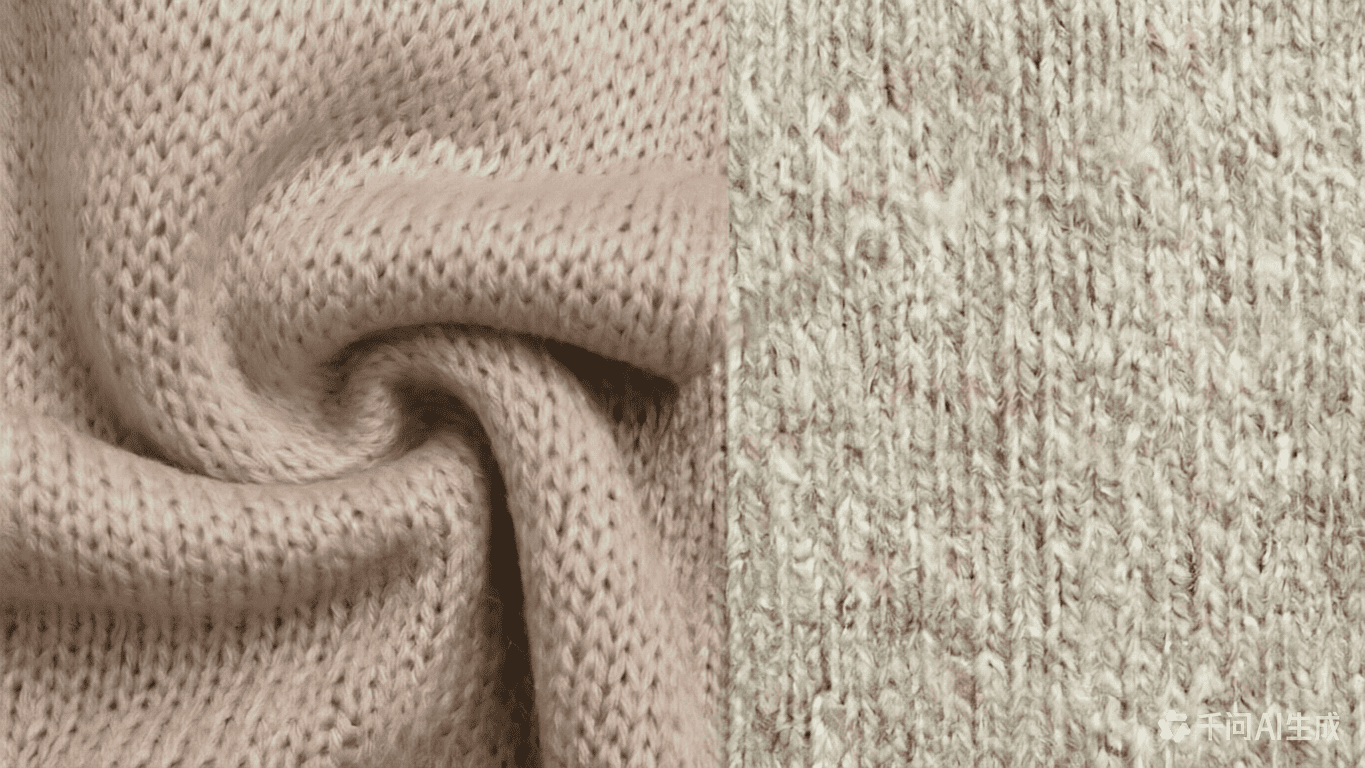
You get a sample batch from a new supplier. The label says “100% wool.” The price looks good. But something doesn’t feel right.
You’re not alone. Mislabeled garments are common in garment sourcing. The most frequent substitution? Acrylic sold as wool. Acrylic yarn costs roughly 1/5 of virgin wool. And once it’s knitted into a sweater, even experienced buyers can’t always tell by eye.
Here’s how to check what a sweater is actually made of — without sending it to a lab.
1. The burn test — the most reliable method
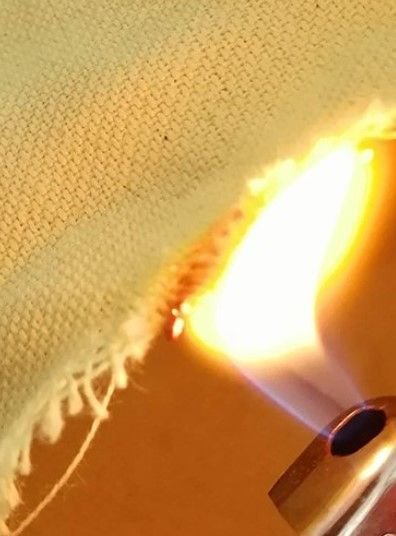
This is the single best way to distinguish animal fibers from synthetics. It’s been used in textile quality control for decades. You need one loose thread from the inside seam (pull it out, don’t cut it) and a lighter.
Real wool (and any animal fiber — cashmere, mohair, alpaca):
- Burns slowly. The flame self-extinguishes if you stop holding it in the fire
- Smells exactly like burning hair (because it is)
- Leaves a black, brittle ash that crumbles between your fingers
- The burned end looks like a black bead. Squeeze it and it turns to powder
Acrylic:
- Burns quickly with a bright, sputtering flame
- Does NOT self-extinguish — it keeps burning
- Smells like melting plastic or chemicals
- Leaves a hard, dark, plastic-like bead that won’t crumble
- Try to break the bead between your fingers — it stays hard
Cotton:
- Burns with a steady flame, smells like burning paper
- Leaves fine, feathery gray ash
- After the flame goes out, it may continue to smolder with a glowing ember
Blends complicate things. A 50/50 wool-acrylic blend will smell like hair AND plastic, and the ash will be a mix of crumbly and hard bits. If the label says “100% wool” but your burn test shows plastic smell + hard bead, the label is wrong. Reject that batch and ask for documentation.
Do the burn test over a sink or metal tray and keep water nearby. Synthetic fibers can drip hot melted plastic.
2. The touch test — feel for the crimp
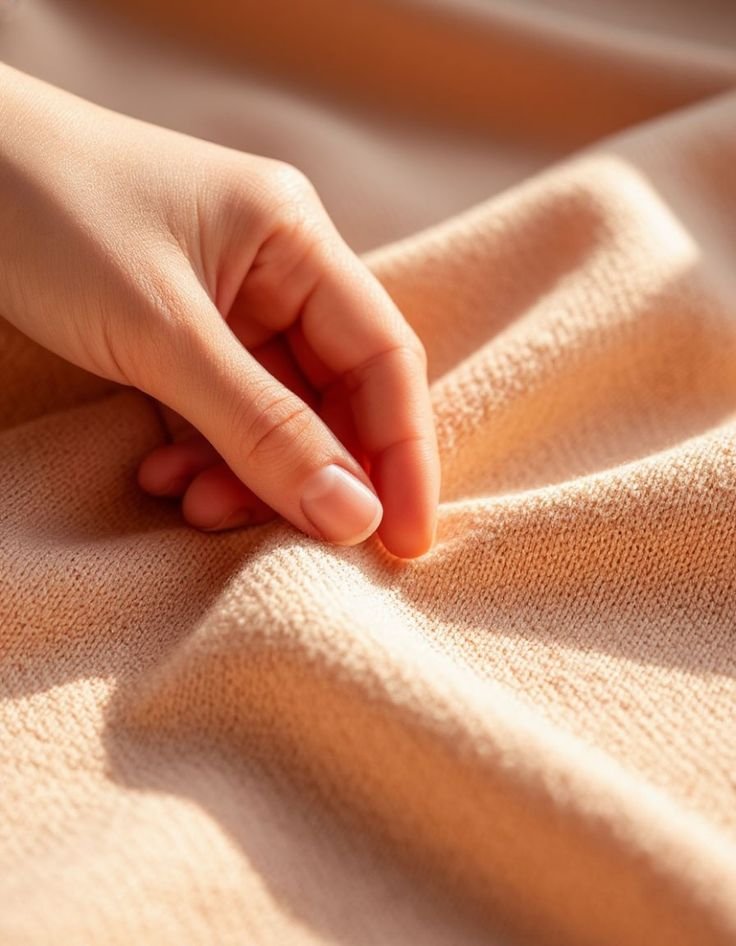
Wool has a natural crimp (wave) in each fiber. This gives wool yarn its springiness.
Wool: Squeeze the fabric for a few seconds and release. Real wool bounces back with almost no wrinkle. The surface feels slightly textured, not slippery. Rub it against your lips or inner wrist — it may feel slightly prickly (even merino, just less so).
Acrylic: Often softer to the touch at first — sometimes suspiciously soft. Squeeze and release, and it holds the crease longer than wool. The feel is more plastic-like. Same difference as vinyl vs. leather.
Cotton: Feels crisp and cool. Squeeze it and it wrinkles easily, doesn’t spring back. No prickle at all.
This test isn’t definitive. Modern acrylic can be engineered to feel close to wool. But combined with other tests, it’s a useful first indicator during sample evaluation.
3. The label inspection — what most buyers miss
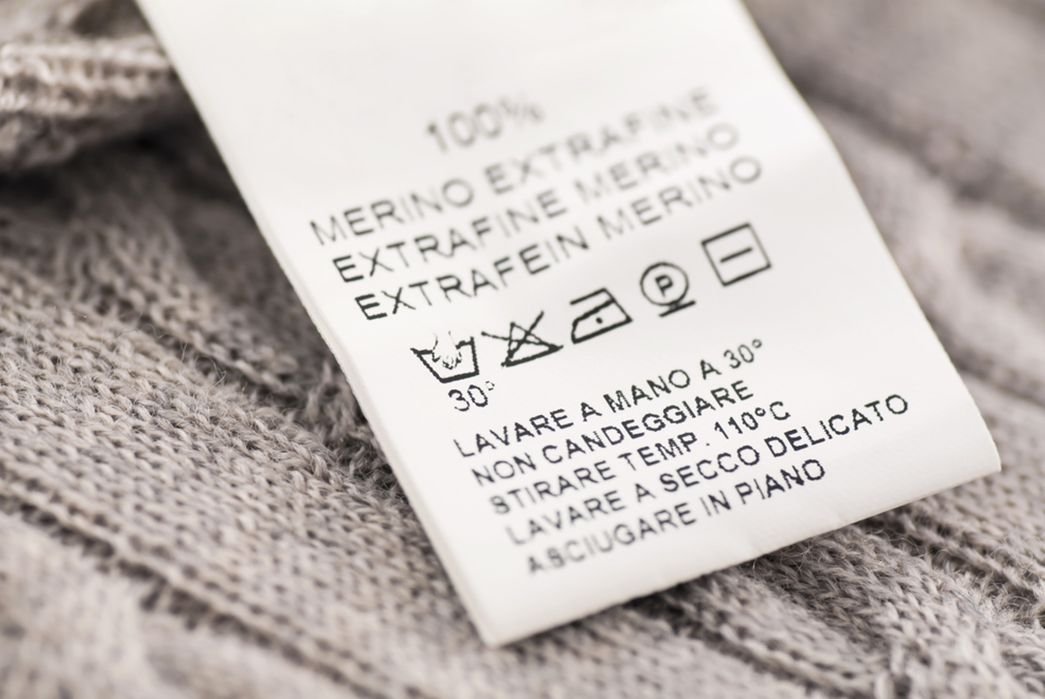
Most people glance at the fabric content and move on. Here’s what to check more carefully during sourcing:
Look for the full composition. A label that says “wool” without a percentage is a red flag. Legitimate labels list exact percentages: “100% virgin wool,” “70% wool, 30% nylon.”
Check for the Woolmark logo. Garments with Woolmark certification have been independently tested. Not foolproof, but a strong signal that the manufacturer invested in verification.
Read the care instructions. Real wool almost always says “dry clean recommended” or “hand wash cold / lay flat to dry.” Acrylic often says “machine wash, tumble dry low.” If a garment labeled “100% wool” also says “machine wash hot, tumble dry” with no precautions, that’s suspicious.
Cross-check price against yarn cost. Know what raw materials cost. If a “100% wool” sweater’s wholesale price is lower than the raw wool yarn needed to knit it, the label can’t be right. That’s basic math.
4. The water droplet test
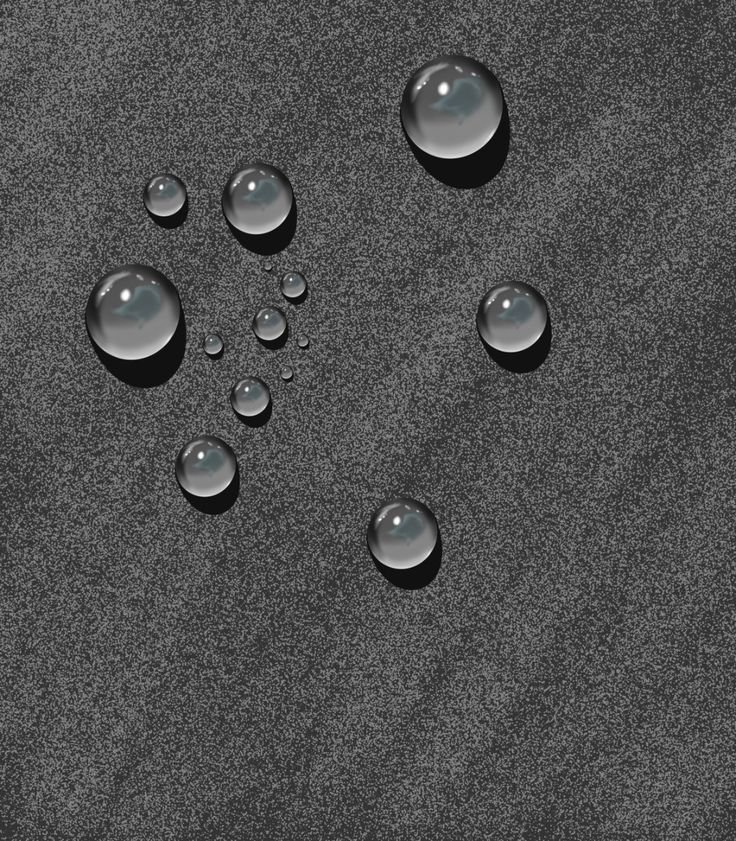
Drop a small amount of water on the fabric and watch:
Wool: Water beads up and takes time to absorb. Wool has natural lanolin that repels water. That’s why wool keeps you warm even when damp — the fiber doesn’t soak up moisture.
Cotton: Water absorbs almost instantly. The fabric darkens immediately where the droplet hit.
Acrylic: Somewhere in between. Water sits on the surface briefly, then absorbs slowly. The behavior is less distinctive than wool vs. cotton.
5. The pilling clue
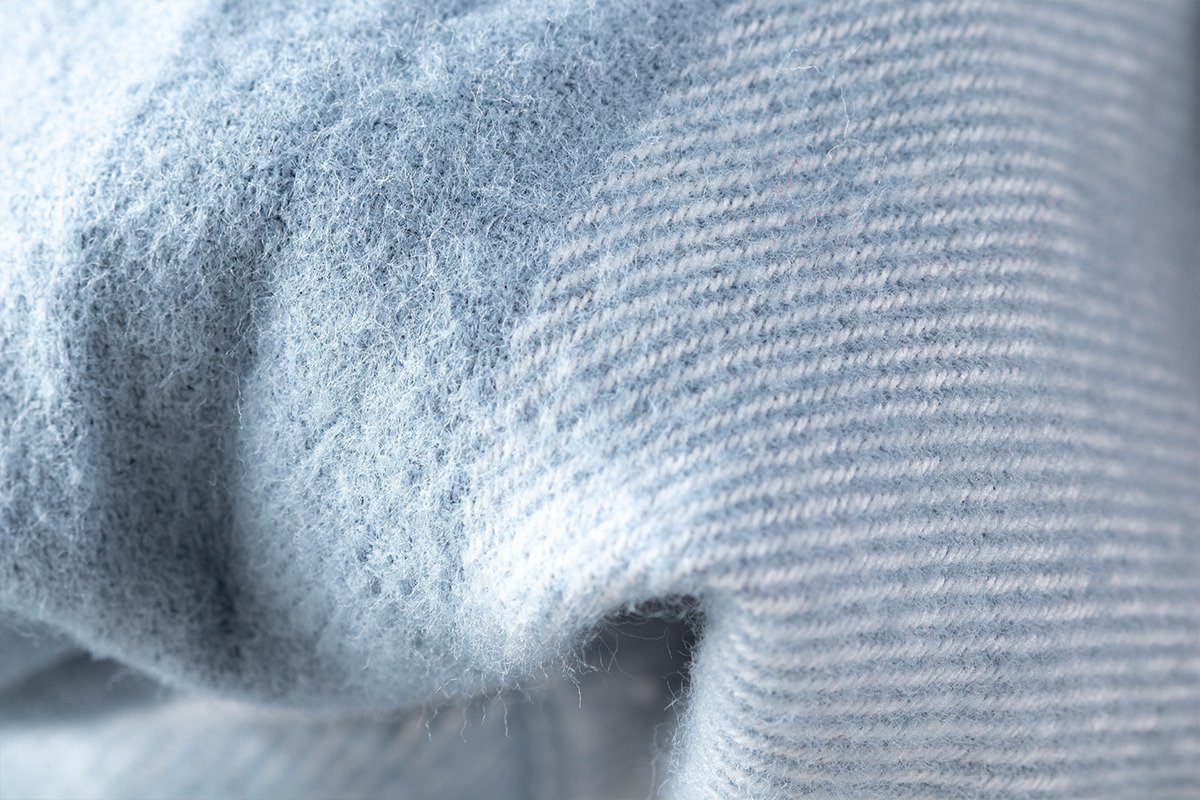
You need a worn sample for this, but it’s useful for evaluating a manufacturer’s consistency across production runs.
Real wool pills at first (short fibers work to the surface), but the pills are fuzzy — they look like little balls of lint. After a few wears, pilling stops because the loose fibers are gone. A fabric shaver cleans it up easily.
Acrylic pills differently. The pills are harder and more stubborn. They look like little plastic beads attached by a thread. And they keep coming. Acrylic fibers are stronger, so pills don’t brush off — they stick around.
Cotton pills less than wool or acrylic, but when it does, the pills are soft and lint-like.
6. The rabbit hair trap — soft hand, short life
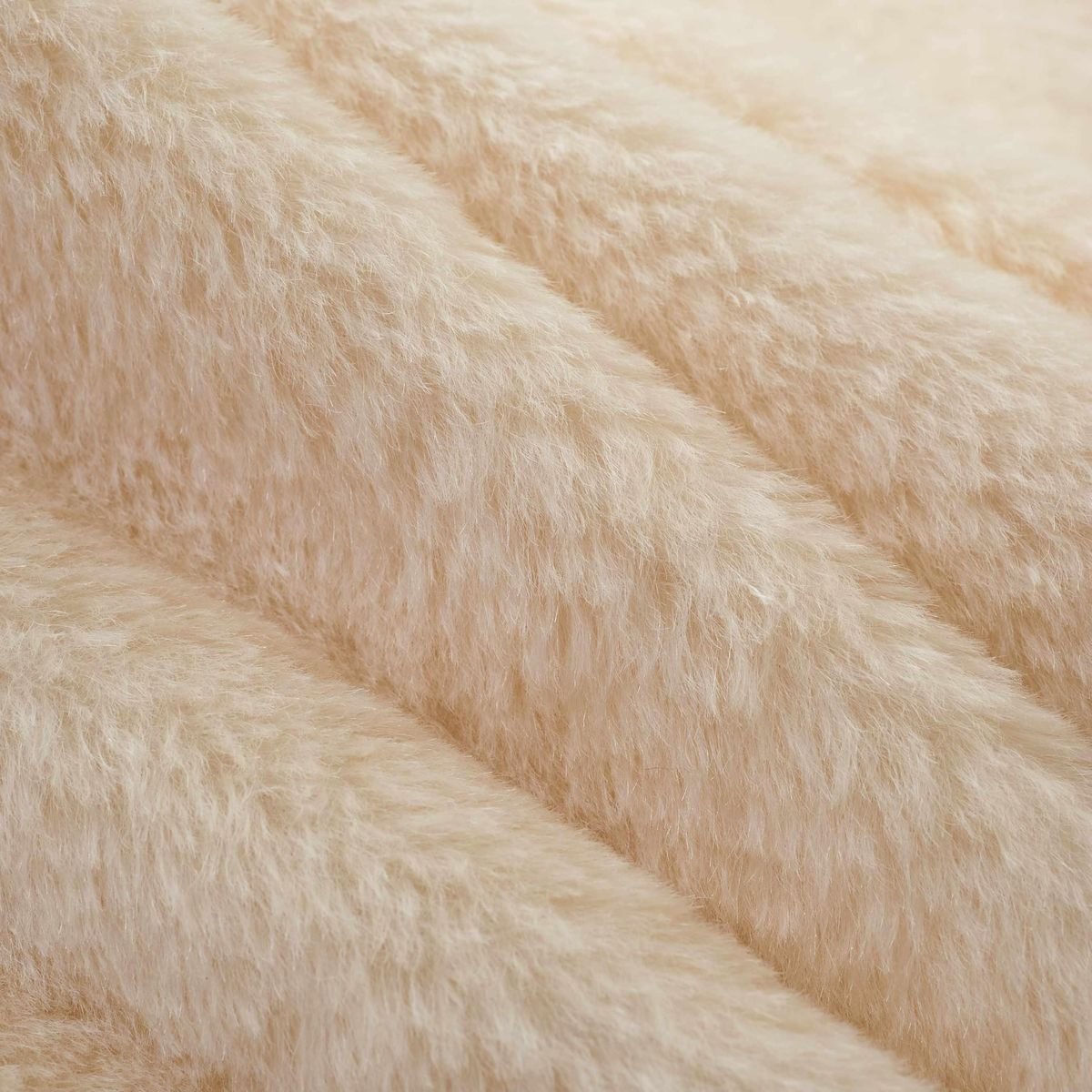
Rabbit hair (angora) is often blended into wool sweaters to improve the hand feel. The fibers are hollow and extremely fine, which gives the fabric a soft, fluffy, luxurious touch. A 10-20% angora blend can make a garment feel much more expensive than it is.
But rabbit hair comes with a catch.
The shedding problem. Rabbit fibers are short and straight — they don’t have the scales or crimp of wool. This means they work their way out of the yarn structure easily. Rub a dark cloth against a rabbit hair blend for 30 seconds. If you see loose fibers transferring, that’s rabbit hair shedding. Real wool doesn’t shed like this.
The durability problem. Rabbit hair has low tensile strength. The fibers break under repeated stress. A sweater that’s 30% rabbit hair will show visible wear at the elbows and cuffs within a season. The softness comes at a direct cost to longevity.
How to spot it: Look for the price-to-hand-feel gap. If a sweater feels as soft as cashmere but costs half as much, rabbit hair is likely involved. Check the label for “angora” or “rabbit hair.” And do the shedding test — rub the fabric against a dark surface and check for fiber transfer.
Not all rabbit hair blends are bad. Low percentages (5-10%) add a nice halo effect without severe shedding. But when you see 20%+ rabbit hair in a blend, you’re buying hand feel at the expense of durability. For brands that care about repeat orders, that trade-off matters.
7. The cashmere scam — treated wool pretending to be cashmere
This is one of the hardest fakes to catch. Unscrupulous manufacturers take superfine merino wool (18-19 micron) and treat it with chemical softeners to mimic the hand feel of cashmere. The treatment can involve chlorination, resin coating, or silicone softeners.
The result? A yarn that feels very close to cashmere — soft, warm, with that characteristic “dry” hand feel. Put it in a garment with a “100% cashmere” label and most buyers won’t suspect a thing.
Why this works: Cashmere fibers (14-16 microns for Grade A) are finer than merino wool (18-24 microns). But once you chemically soften a 19-micron merino fiber, the difference in hand feel becomes almost undetectable to most people. The fiber structure is still wool, but the surface treatment tricks your fingers.
How to catch it:
- The microscope test (most reliable). Cashmere fibers have distinctive scale patterns — the scales are thinner and less pronounced than wool scales. Under a 100x microscope or a handheld textile loupe, cashmere scales look like barely visible rings. Wool scales are more jagged and overlapping. If you have access to a fiber microscope, this is the definitive test.
- The fold test. Take a single ply of yarn and fold it sharply. Real cashmere holds almost no crease memory. Chemically treated wool tends to hold a faint crease line where it was folded. This isn’t 100% reliable but it’s an indicator.
- The consistent softness test. Run your fingers along the fabric in both directions (with the grain and against it). Real cashmere is equally soft in both directions. Chemically treated wool often feels softer in one direction and slightly rougher in the other, because the chemical treatment doesn’t penetrate uniformly on the fiber scales.
- Price check. Grade A cashmere yarn costs $60-120 per pound. Merino wool yarn costs $15-40 per pound. If a “cashmere” sweater is priced near merino levels, the numbers don’t add up. No one is giving away cashmere.
- Ask for the cashmere mill certificate. Real cashmere comes from specific regions (Inner Mongolia is the largest producer). Reputable cashmere suppliers provide mill certificates with fiber diameter testing results. If the supplier can’t produce one, that’s a red flag.
A note on “baby cashmere” and “cashmere blends”: These terms are often marketing language for diluted or treated products. True 100% cashmere is rare and expensive. If you see “cashmere blend” on a label, verify what the other fibers are. Cashmere blended with wool isn’t automatically bad — but it should be priced accordingly.
A quick-reference chart
| Test | Wool | Acrylic | Rabbit Hair Blend | Cashmere (real) | Treated Wool (fake cashmere) |
|---|---|---|---|---|---|
| Burn smell | Burning hair | Melting plastic | Burning hair (mixed) | Burning hair, finer | Burning hair |
| Ash type | Crumbly black bead | Hard plastic bead | Crumbly + hollow fibers | Very fine, light ash | Crumbly black bead |
| Self-extinguishes | Yes | No | Yes | Yes | Yes |
| Feel | Textured, springy | Soft, plastic-like | Very soft, fluffy | Supremely soft, dry | Soft but uneven |
| Shedding | No | No | Yes (rub test) | Minimal | No |
| Durability | Good | Moderate | Poor | Moderate | Moderate |
| Crease memory | Medium | High | Low | Very low (almost none) | Low-medium |
| Yarn cost (rough) | $15-40 / lb | $3-8 / lb | $10-25 / lb | $60-120 / lb | $20-40 / lb |
What this means for buyers
If you’re sourcing sweaters for your brand, you can’t rely on labels alone. Here’s what we tell our clients at Lewen Garment:
Test your samples. Do the burn test on every sample batch. It takes 30 seconds and catches acrylic substitution immediately. For suspected cashmere, ask for a microscope test or a mill certificate.
Ask for mill certificates. Reputable yarn suppliers provide certificates of composition and fiber diameter testing. If your manufacturer can’t produce one, that’s a problem.
Work with manufacturers who source their own yarn. A factory that buys commodity yarn from a trader has less control over what’s in it. A factory with direct mill relationships can trace every batch.
One bad batch can cost you a season. The savings from a cheaper “wool” or “cashmere” yarn aren’t worth the risk of returns, chargebacks, and reputation damage.
Know your price thresholds. If the price doesn’t match the yarn cost, the label is lying. Do the math before you commit to production.
FAQ
- Can a burn test damage the sample?
You only need one loose thread from the inside seam. Pull it from the side seam — there’s almost always enough loose thread to test without affecting the garment. - What about cashmere vs. acrylic?
Same principle as wool. Cashmere burns like animal fiber (burning hair), with slightly finer ash. Expensive “cashmere” that smells like plastic is acrylic or a blend. - Are there synthetic fibers that burn like wool?
No. The burning hair smell is unique to animal fibers (wool, cashmere, mohair, alpaca, silk). No synthetic fiber mimics it. - Does superwash wool behave differently?
Yes. Superwash wool has been treated to remove scales and lanolin. It absorbs water faster than untreated wool. But the burn test stays reliable regardless of treatment. - What about recycled wool?
Recycled wool blends don’t always burn the same as virgin wool because they may contain residual synthetic fibers from the original garment. Expect a mixed burn result and ask the supplier for the exact composition breakdown. - How much rabbit hair is too much in a blend?
Above 15-20%, the shedding and durability problems become noticeable. Below 10%, rabbit hair adds a nice halo without major downsides. If you see 30%+ rabbit hair, expect significant fiber loss over time. - Can lab testing tell treated wool from real cashmere?
Yes. A fiber diameter analysis (via Optical Fibre Diameter Analyzer) and scale pattern microscopy can distinguish cashmere from treated wool with high accuracy. This costs $50-150 per sample at a textile testing lab like SGS or Bureau Veritas. For high-value cashmere orders, it’s worth the cost.