


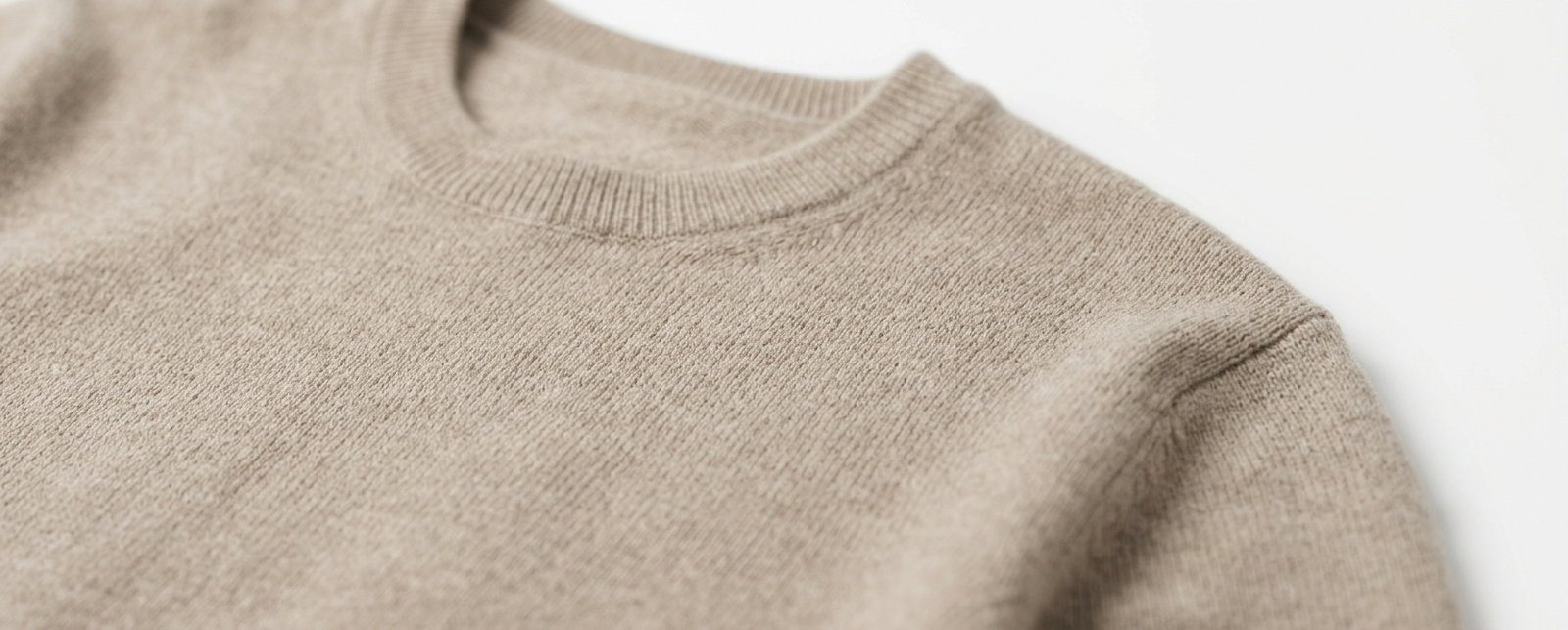
With Yarn Expo Autumn confirmed for late 2026 and industry shifts in seamless knitting, wool sourcing, and sportswear design engineering, this year’s autumn/winter season has clear manufacturing implications. Here’s what’s actually happening in knitwear production for AW26.
1. Design engineering is changing knitwear specs
Knitting Industry’s latest report on design engineering for knitted sportswear (July 2026) points to a shift. Brands aren’t just asking for seasonal color updates anymore. They’re asking for structural performance built into the stitch.
What that means for manufacturers:
- Zoned compression isn’t a premium add-on. It’s becoming a baseline expectation for sportswear orders.
- Seamless knitting inquiries are up, driven by brands looking to eliminate side seams in active knit tops.
- Brands want stitch density maps, not just spec sheets. They ask “how many stitches per inch at the cuff vs the body?” and expect a real number.
If your factory can’t zone density within a single panel, you’re losing sportswear and athleisure orders to competitors who can.
2. Yarn Expo Autumn signals continued demand for specialty yarns
Yarn Expo Autumn is set to host global exhibitors later this year. What that tells us: the push for specialty blends isn’t slowing down.
The yarns getting attention this season:
| Yarn type | What brands ask for | Manufacturer note |
|---|---|---|
| Extra-fine merino (19.5 micron and below) | Next-to-skin softness, machine-washable | Requires careful scouring + anti-felting treatment |
| Cashmere blends (10-30% cashmere + merino) | Luxury feel at lower price point | High twist to avoid pilling; test for yarn breakage |
| Organic / recycled cotton blends | Sustainability claims | Pre-shrink testing critical |
| Acrylic-wool blends for heavy gauge | Warmth + weight at mid-range cost | MOQ-friendly; wide yarn availability |
Expect longer lead times during Yarn Expo season (September-November) as mills allocate production to larger exhibition orders.
3. Seamless knitting as a manufacturing capability — not just a category
The “Arid Futures” research from Studio Eva de Laat (covered by Knitting Industry this month) re-frames seamless knitting as a platform technology. The research explores how stitch structures can manage heat, moisture, and air flow at the architectural level.
For a garment manufacturer, this isn’t academic. It’s about what your factory’s flat-bed machines can actually do:
- Programmable spacer structures — creates ventilation channels without added lining
- Gradient density mapping — transitions from dense to open knit within a single garment
- Tubular knitting for sleeves and bodies — eliminates side seams entirely
Most mid-tier factories in China run Shima Seiki or Stoll machines. If your programming team knows how to use pattern design software (SDS-ONE APEX or M1plus), you can already produce zoned seamless garments. The question is whether your sales team knows how to sell that capability to brands.
4. Wool sourcing faces pressure
Campaign for Wool recently announced the death of its chairman Peter Ackroyd (Knitting Industry, July 21). The organization’s future direction is uncertain, but the underlying trends are clear.
Key wool sourcing shifts for AW26:
- Australian merino supply is stable but prices have risen 8-12% year-over-year due to drought-reduced flock sizes.
- Brands are asking for mulesing-free wool certification as standard, not optional.
- Lower-cost alternatives (New Zealand crossbred wool, South American merino) are getting more attention from mid-market brands.
- Recycled wool content is appearing in spec sheets for the first time at volume. Expect to quote recycled wool blends for spring 2027 briefs.
5. Karl Mayer’s HKS 4-S EL: faster tricot production
Karl Mayer introduced the HKS 4-S EL in July 2026. This high-speed tricot machine runs at higher efficiency with lower energy use.
For garment manufacturers: this affects you indirectly. Faster tricot production means lining fabrics, mesh inserts, and warp-knit panels get cheaper and more available. If you source linings or structural knits, expect supply-side relief in the next 3-6 months.
6. Socks and hosiery: design + production merging
Knitting Industry’s coverage of the sock industry this month highlights a growing trend. Sock brands are asking manufacturers to handle both design engineering and production under one roof. The same logic applies to sweater and knitwear production.
What that means for a sweater factory:
- Brands want to send a sketch or a tech pack and get back a finished prototype — not a yarn card and a meter of swatch.
- In-house pattern grading and 3D simulation (like Browzwear or CLO 3D) is becoming a selection criterion for new supplier audits.
- Factories that offer “design-to-production” as a single service have shorter sales cycles.
7. What this means for brands and designers
Demand for clear gauge communication. Brands who understand gauge (12gg vs 7gg vs 3gg) make better sourcing decisions and get better results. Manufacturers, educate your clients early.
Seamless construction is no longer niche. If you’re sourcing knitwear for AW26 and haven’t asked your factory about seamless capability, you’re leaving performance and margin on the table.
Yarn substitution is a real negotiation. Merino up 10%. Cashmere even more. Factories that offer certified alternatives (blends, recycled, South American sources) close more deals.
Technical specs in sell sheets. The brands that win are the ones that send a real spec: stitch density, yarn count, knit structure type, wash test requirements. The brands that guess — guess wrong.
Getting AW26 products right starts with the right factory partner. Lewen Garment, established 2002 in Guangdong, China, produces custom knitwear from wool, merino, cashmere blends, and performance yarns at 100-piece minimums. Send your spec sheet and we’ll quote within 48 hours.
FAQ — AW26 knitwear manufacturing
What yarns are trending for autumn/winter 2026?
Extra-fine merino (19.5 micron and below), cashmere-merino blends, organic and recycled cotton blends, and acrylic-wool blends for heavy gauge knitting. Specialty yarns dominate the briefs this season.
How has merino wool pricing changed for AW26?
Australian merino prices are up 8-12% year-over-year due to drought-reduced flock sizes. Brands are asking for mulesing-free certification as standard. Lower-cost alternatives from New Zealand and South America are getting more attention.
What seamless knitting capabilities should factories offer?
Factories should be able to program spacer structures for ventilation, gradient density mapping for zoned compression, and tubular knitting to eliminate side seams. Shima Seiki and Stoll machines can handle this if the programming team has the right software training.
What’s the MOQ for custom knitwear at Lewen Garment?
Lewen Garment’s minimum order quantity is 100 pieces per style. The factory offers custom knitwear from wool, merino, cashmere blends, and performance yarns with a 48-hour quoting turnaround.