

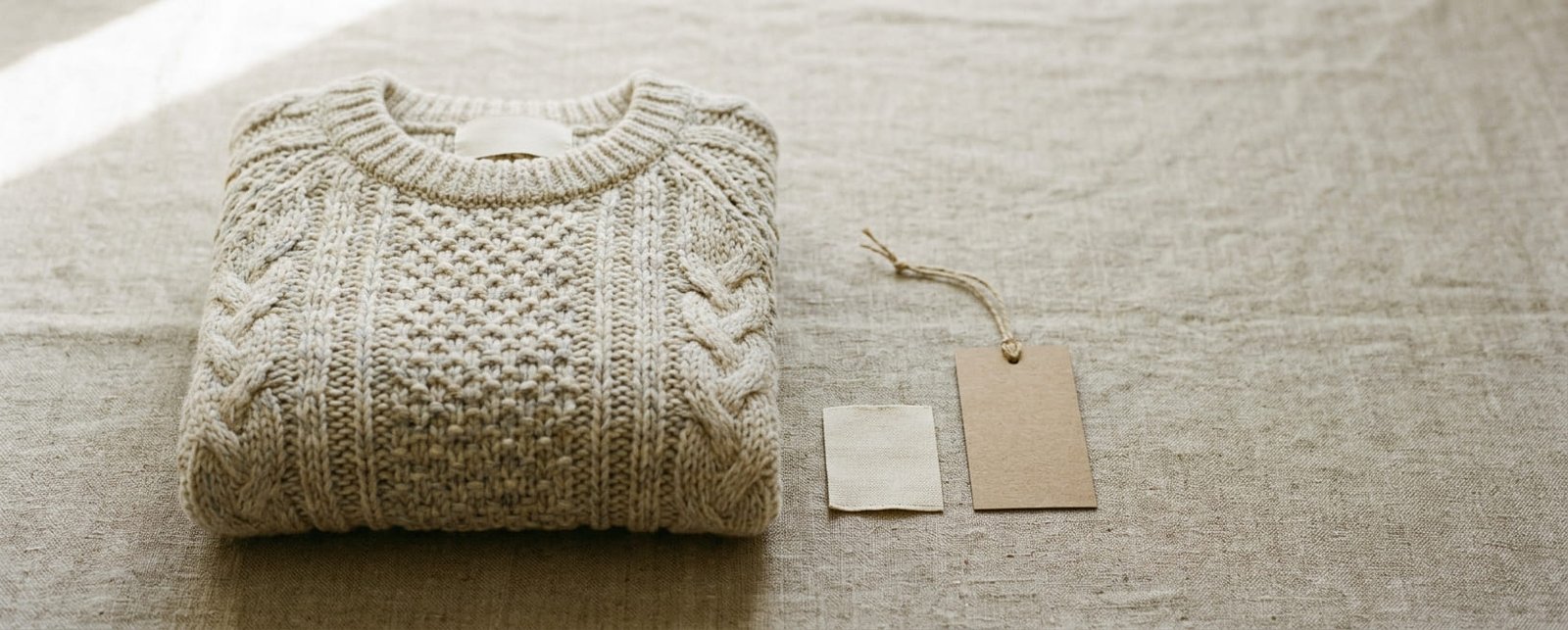
Private label knitwear is knitwear made to your specification by a factory, then sold under your brand’s own labels, tags and packaging. The factory’s name never appears on the product. You own the design direction and the identity; the factory owns the manufacturing.
The one-line distinction buyers actually need: with white label, you buy a product the factory already developed and put your label on it. With private label, you control the specification — yarn, gauge, structure, colour, measurements, trims and branding — and the factory knits it for you.
Where this gets confusing is the overlap with OEM, ODM and contract manufacturing, because factories use those terms loosely. The tables below sort out who owns what, then the rest covers what private label gives a brand and when it is the wrong route.
Private label knitwear, defined
Private label is your brand, your spec, their factory. In knitwear, “your spec” is a set of decisions the factory knits to:
- Silhouette and measurements — body length, chest, shoulder, sleeve, neckline drop, and how they grade across sizes.
- Yarn composition and count — a cotton and acrylic blend, a merino blend or 100% cotton, specified by fibre content and yarn count.
- Gauge — the machine gauge the style is knitted on, which sets how fine or coarse the surface looks and how heavy the fabric feels.
- Knit structure — plain knit, rib, jacquard, intarsia, pointelle or cable.
- Colour — the exact colour reference and the dye route: dyed yarn before knitting, or garment dyeing after make-up.
- Trims — buttons, zips, drawcords, rib trims, neck tape and any functional detail named on the tech pack.
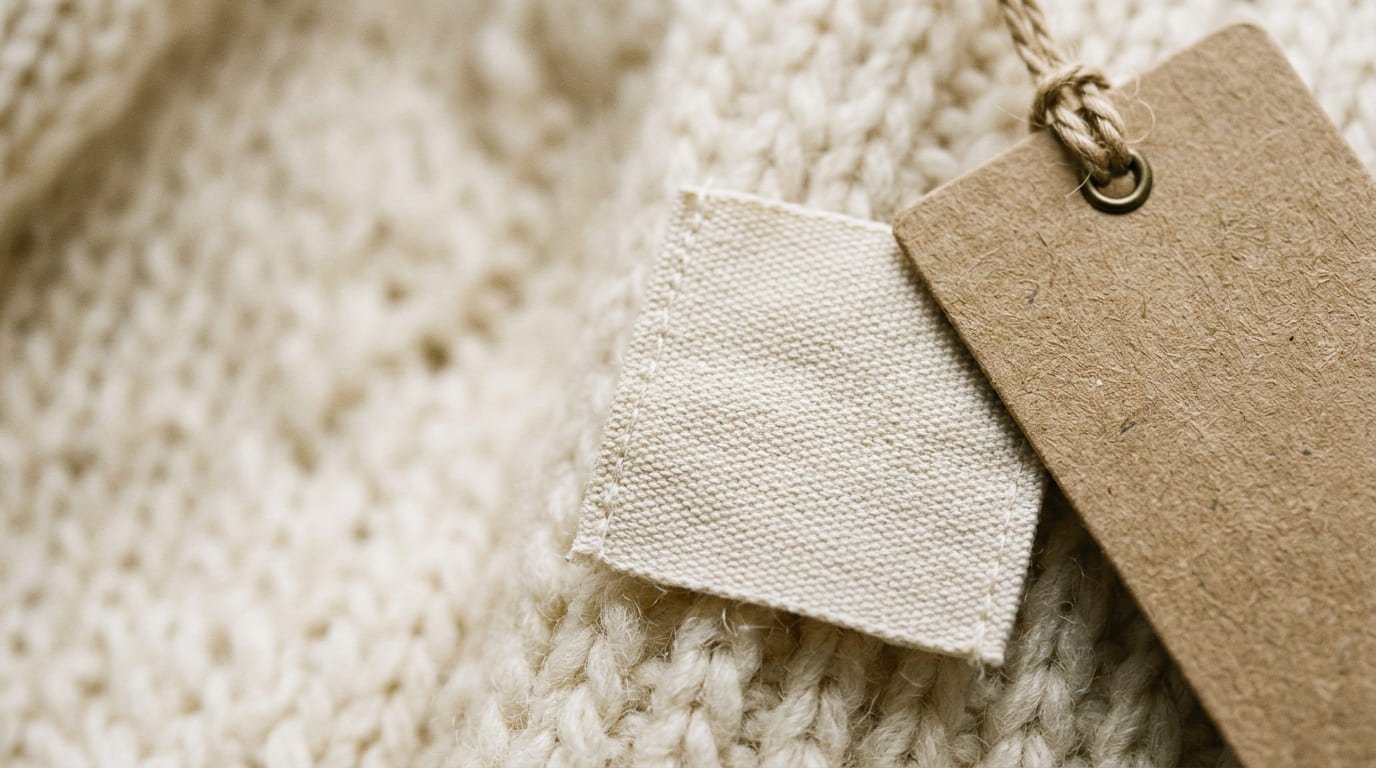
- Label and packaging set — woven main label, care label, size label, hangtag, polybag and carton markings.
The product is made for you under that spec. It is not a catalogue style being rebadged: the measurements, yarn and construction exist because you asked for them, which makes the style yours and the reorder predictable. That model sits inside the wider set of custom knitwear manufacturing options.
Private label vs white label vs OEM vs ODM vs contract manufacturing
The difference between these models is ownership, not price. Whoever owns the design owns the direction; whoever owns the spec owns the yarn, measurements and construction the factory knits to.
| Model | Who owns the design | Who owns the spec | What you can change | Typical best fit |
|---|---|---|---|---|
| Private label | You set the design direction | You, with the factory’s technical input | Yarn, gauge, structure, colour, measurements, trims, labels and packaging | Brands with a product direction that need their own fit and a spec they can reorder |
| White label | The factory | The factory | Your label, tags and packaging within limits, sometimes colour or trim | Fast market testing, or filling a range gap with little development budget |
| OEM | You | You | Everything in the tech pack, because you supplied it | Brands with in-house design and a finished tech pack |
| ODM | The factory | The factory, with your changes | Choice of existing styles and some modification | Buyers who want developed styles with light adaptation |
| Contract manufacturing | Negotiated | Negotiated | Depends on the contract: some cover making only, others include development | Brands with a pattern maker or an existing design team |
OEM and ODM describe who developed the product. Private label describes whose branding and specification the product is made to, so the terms overlap in quotes. Contract manufacturing is a commercial arrangement rather than a product model, so ownership questions belong in the agreement. The OEM and ODM difference in depth sits in a separate article: OEM vs ODM in knitwear manufacturing.
Private label vs white label in knitwear
| What changes | Private label | White label |
|---|---|---|
| — | — | — |
| Yarn choice | You choose composition and count with the factory | Fixed by the factory’s existing product |
| Gauge and weight | You set the target gauge and fabric weight | Whatever the stock style is knitted at |
| Colour and dye route | Your colour reference, with dyed yarn or garment dyeing agreed up front | The factory’s existing colour options |
| Measurements and fit | Your measurements and grading, sample-approved | The factory’s block, with minor tolerance talk at best |
| Minimum order quantity | Driven by yarn, colour count and size structure | Usually lower and tied to what the factory already runs |
| Label and packaging | Your woven label, care label, hangtag, polybag and carton marks | Your label added to the factory’s product, limited packaging options |
| Exclusivity | The spec can be exclusive to you if it is written into the agreement | Not exclusive — the same product is sold to other brands |
| Time to first sample | Longer, because development and sampling come first | Shorter, because the product already exists |
A white label sweater can still be a good decision: you get to market with your branding on a proven product and learn how customers react before committing to a full spec. What you cannot do is claim the fit as your own or stop another brand selling the same piece. MOQ usually decides the choice, and the trade-offs by style, yarn and colour sit in the knitwear MOQ guide.
What private label actually gives a brand
Private label exists so your product is not identical to what another brand sells.
Your own specification means your fit, your yarn, your construction detail. A crew neck can be two centimetres shorter in the body and knitted at a different gauge from the version three other brands stock, and that difference is the product. Labels, care labels, hangtags and packaging belong in the spec from the first conversation.
You also get a repeatable spec: once sample one is approved, the measurements, yarn, colour reference and construction are documented, and season two reorders run against that document instead of memory.
The trade-off is simple: you carry the development work and the sampling cost, and the first order lands later than a white label order. Sample development typically runs 7–10 working days at Lewen once yarn and spec are confirmed, and bulk production 15–30 working days after approval. The cost logic is in custom knitwear manufacturing cost.
What private label does not mean
Three assumptions send buyers down the wrong route.
It does not mean you need your own factory. You are buying machine time, not equipment: the factory knits, washes, presses, inspects and packs to your approved spec.
It does not mean you must design from a blank page. A reference image, a garment you already sell or a competitor piece you want to improve can all start the brief. The factory turns that into a measurable spec, so the finished product is the one you specified.
It does not mean the factory will sell your design to someone else. Exclusivity is available, but it has to be agreed in writing before development starts: what is exclusive, how long it runs, which territory it covers, and whether it survives a gap in ordering. A verbal promise is not an agreement.
How private label development runs at a knitwear factory
- Brief — you send a concept, tech pack or reference garment.
- Development — yarn, gauge, construction, fit and branding are reviewed together and turned into a spec.
- Sampling — you check fit, handfeel, colour and finishing before anything goes to the line.
- Bulk and delivery — the approved spec runs in bulk, then the order is inspected and shipped.
The full workflow, including what happens at each approval, sits on Lewen’s custom private label knitwear page. If you are comparing factories first, the knitwear manufacturer checklist covers what to ask.
What to send a knitwear factory to start
A tech pack gets the fastest response: AI, PSD or PDF, with front and back views, measurements per size, construction notes, colourways and branding placement. Without one, send reference images or a garment you want measured and developed from. An existing garment is often the most useful brief, because the factory measures it instead of guessing from a photo.
For knitwear, add four things that don’t apply to woven product:
- Yarn preference or a yarn reference, so the factory matches handfeel instead of guessing
- Target weight, in grams per square metre or against a garment you own
- Season and target market, which set warmth, drape and finishing
- Size range and grading, including whether you need extended sizes
Gauge matters here. Lewen Garment runs 1.5GG to 18GG, wider than the 3GG to 18GG standard across the Dalang cluster in Dongguan — the extra range is at the coarse end, so very heavy gauge knits stay in-house. Send Lewen your yarn and gauge details and the gauge question gets answered against your yarn, not a chart.
When private label is the wrong route
If you have no product direction yet and want to test a market quickly, white label is faster and cheaper. Buy a developed style, apply your branding, see whether anyone buys it. Come back to private label when you know what to change.
If your volume is very small and unproven, say so. Development and sampling cost time and money, and a brand with a few pieces and no sales history is better served by a low-MOQ route first. Lewen’s standard minimum is 100 pieces per style per colour, workable for a first private label order but still a commitment worth testing demand against.
If your value proposition is a graphic print or embroidery on a plain blank, a cut-and-sew programme may fit better. Knitting builds structure and texture into the fabric, which is a different product from a printed tee. Choose the route that matches the product.
Common mistakes when briefing a private label knitwear order
- Confusing private label with white label and briefing the wrong route. Asking for private label while expecting to choose from a catalogue produces samples that never match.
- Assuming exclusivity without a written agreement. If the spec is not contractually yours, the factory can run it for another brand. Put it in writing before development starts.
- Treating label and packaging as an afterthought. Woven labels, care labels, hangtags and polybags are what the customer holds at unboxing, so specify them with the garment.
- Not locking the spec before sampling. Every change after sampling resets yarn, gauge or measurement decisions, which shows up as drift between samples and extra time.
- Expecting the factory to invent the design direction from a vague mood. A moodboard sets tone, not specification. Without a reference garment or tech pack, the factory guesses at fit and weight.
Frequently asked questions
What is private label knitwear?
Private label knitwear is knitwear produced to a brand’s own specification and sold under that brand’s labels, tags and packaging. The brand sets the yarn, gauge, structure, measurements and colour; the factory manufactures it, and its name does not appear on the product.
What is the difference between private label and white label knitwear?
With white label, you choose a product the factory already developed and apply your branding to it. With private label, you specify the yarn, gauge, structure, fit and trims, and the factory knits to that specification. White label is faster; private label gives you a product other brands are not selling.
Is private label the same as OEM or ODM?
No. Private label describes production made to your specification and sold under your brand, and you may or may not supply the full design. OEM means you bring the design and tech pack. ODM means the factory developed the styles and you select from them.
Do I need a tech pack for private label knitwear?
Not always. A tech pack with measurements and construction notes is the fastest start, but a reference image, a sample you own or a garment to measure all work. For knitwear, add your yarn preference, target weight, season and size range.
What is the minimum order for private label knitwear?
It depends on the yarn, the number of colours and the size structure. Lewen Garment’s standard minimum is 100 pieces per style per colour. Multiple colours or multiple yarns usually push the minimum up, because each colour and yarn needs its own setup.
Can a private label knitwear design be exclusive to my brand?
Yes, if exclusivity is agreed in writing before development starts. A private label spec can be exclusive to your brand for an agreed period and territory. A white label product cannot be, because the factory already sells it to other customers.