



In the world of high-end menswear, cashmere has always occupied the top of the pyramid. As the soul fabric of winter knitwear collections, it not only represents high value but also the ultimate wearing experience.
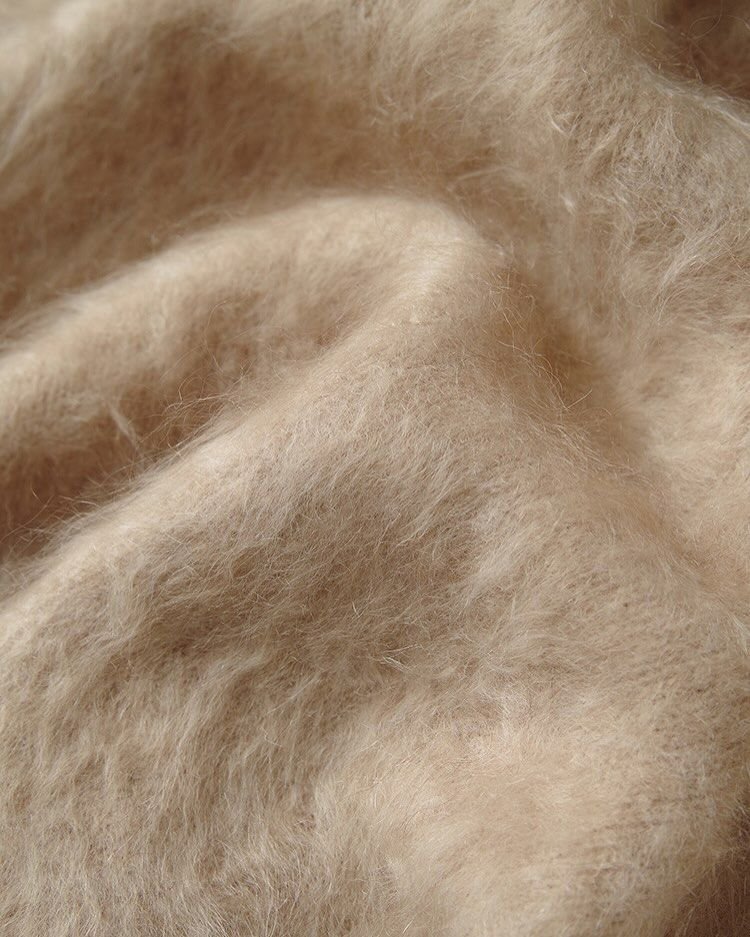
What is cashmere?
Cashmere is a thin layer of fine down between the skin and the base of the coarse hair of a goat. Its production is extremely rare, so it is often priced by the gram in the market and is known in the industry as “soft gold”.
Core features
Buttery Soft: The fibers are extremely fine and contain no medulla, so they are not only skin-friendly but also have a silky smooth feel like butter when worn next to the skin.
High Insulation: Cashmere is eight times warmer than regular wool, but weighs only one-fifth as much. This allows cashmere sweaters to provide top-notch warmth while remaining lightweight.
Lofty Texture: After washing, the surface develops a delicate, velvety sheen, creating a visually warm and inviting feel.
Suitable process
Classic Cable Knit: The cable knit technique increases the thickness and air layers of the fabric, maximizing the warmth of cashmere while creating a retro, old-money style.
Plain Jersey: Suitable for making lightweight, close-fitting base layers, highlighting the fabric’s natural high-quality sheen.
What cashmere actually is
Cashmere is the undercoat of the cashmere goat: the fine down the animal grows under coarse guard hair for winter and sheds in spring. Herders comb it out rather than shear it, then separate it from the guard hair in a process called dehairing.
The fibre comes from cold, high-altitude regions. Inner Mongolia is the best-known source, including the Alashan plateau in the west, along with parts of Xinjiang, Mongolia and Central Asia. Cold winters and sparse grazing are part of why the down grows fine. Yield per animal is small. A single goat produces a modest amount of down each year, commonly quoted in the range of 150–250 g of raw fibre, and dehairing and sorting cut that down further. It can take the yearly yield of several animals to make one sweater. That scarcity, not marketing, is the main reason cashmere sits at the top of the price range among animal fibres.
On specs, cashmere is usually quoted between about 14 and 19 microns, with 15–16 microns a common premium target. Fibre length matters just as much. Longer staples, often in the 30–40 mm range for good grades, spin into a stronger yarn that holds shape and pills less. Shorter fibre is cheaper and shows its limits after a few wears. To see where those numbers sit against wool, alpaca and angora, read how cashmere compares with other animal fibres.
Grades of cashmere (and why the label isn’t enough)
“100% cashmere” tells you the fibre content is cashmere. It doesn’t tell you the micron count, the fibre length, the natural colour or how much coarse hair survived dehairing. Those four things decide how the sweater feels on day one and how it looks after ten washes. Grading names aren’t standardised between suppliers, so a grade label on a spec sheet is worth less than the numbers behind it.
Two sweaters can both be 100% cashmere and behave nothing alike. Fine, long fibre spun with a proper twist holds its shape and blooms slowly. Short fibre with a high share of coarse hair fuzzes quickly, pills at the underarm and loses its surface within a season. Dye method matters too: loose-stock dyeing is harder on the fibre than top dyeing. Natural colour sets limits as well. White down takes pale shades easily, while brown and grey down restrict the palette.
So ask for the fibre spec, not the label claim. Request the micron range with a mean and a maximum, the fibre length, the origin, and how the lot was dehaired. Then ask for a physical yarn sample from the actual lot before bulk. A finer micron, longer fibre, lower coarse-hair content and white base all push cost up. What drives a knitwear quote explains how those fibre decisions land in the final price.
Cashmere vs merino vs lambswool: which to spec
| Spec | Cashmere | Fine merino | Lambswool |
|---|---|---|---|
| Warmth-to-weight | Highest of the three | High, close behind | Moderate; warmth comes from bulk |
| Softness next to skin | Softest, almost no prickle | Very good, fine micron matters | Softer than standard wool, still wool |
| Durability | Lower abrasion resistance | Good | Very durable |
| Pilling | Pills if fibre is short or the knit is loose | Moderate; improves with longer fibre and plied yarn | Some early pilling, then settles |
| Care | Hand wash or a gentle wool cycle, dry flat | Wool cycle, machine wash options with treated yarns | Wool care, cool wash, dry flat |
| Cost position | Highest | Mid to high | Mid to low |
| Best use | Luxury knitwear, lightweight layering, gifting | Year-round knitwear, base layers, volume programmes | Heavy sweaters, classic knits, price-sensitive ranges |
The choice follows the retail price point and the care message you can support. If you want a softer hand without moving to the top tier, compare merino wool vs lambswool: merino at 17–19 microns sits closer to cashmere in feel than most buyers expect, and it’s far more forgiving in the wash.
Season matters too. If the knitwear line sits next to a cotton programme, cotton vs wool knitwear covers the trade-offs in warmth, care, drape and cost. A cashmere/wool or cashmere/silk blend is often the practical middle: less fibre cost, better durability, and a hand-feel that still reads premium.
Manufacturing cashmere: what the factory has to control
Cashmere moves in the wash more than standard wool. It’s a fine, scaled fibre, and heat, agitation and the wrong detergent can felt it. So shrinkage control starts before knitting. The panel is knitted with a known allowance, the actual yarn lot is wash-tested, and the machine programme is set from the measured result rather than a standard table. Even at the same micron, a new lot can shrink differently, so the wash test is repeated per lot.
Yarn tension is the second control point. Fine cashmere yarns vary more than cotton or acrylic. Too much tension thins the yarn and creates weak spots that show as holes later; too little gives loose stitches and a garment that stretches out at the elbows. Tension is calibrated per machine and per yarn lot. Linking matters as much as knitting. Cashmere seams have to be linked at the right density, because a tight link on a soft yarn creates a hard, puckered seam that no amount of pressing will fix.
Washing and finishing carry the hand-feel. The wash recipe sets temperature, time and softener, and the difference between a flat cashmere sweater and a soft one is often in those parameters. Steam and shape, don’t dry press. Over-pressing crushes the loft that cashmere is bought for. If the fibre budget won’t stretch to 100% cashmere, blends are the cost-managed route: cashmere/wool improves durability, cashmere/silk adds drape and sheen. Yarn options by gauge shows how the blend decision interacts with machine gauge.
Care, longevity and what to tell your customer
Cashmere lives longer when the care instructions are simple and specific. Tell the customer to hand wash cool or use a wool cycle with a neutral detergent, skip bleach and enzymes, and never wring or hang the garment. Lay it flat, reshape it while damp, and dry it away from direct heat.
For storage, fold rather than hang, because hangers stretch the shoulders, and store clean. Moths feed on soil as well as fibre, so a washed sweater in a breathable bag with cedar or lavender beats a dusty one in a sealed bin. Tight plastic traps moisture.
Pilling is the part buyers get wrong most often. Any cashmere sweater shows surface fuzz in the first wears, especially under the arms, at the cuffs and where a bag strap rubs. It’s short fibre working out of the yarn, not a defect on its own. Loose knits pill more than dense ones, and the fibres settle after a few washes. A pill comb handles what’s left.
Care messaging protects margin. A product page that says “hand wash cold, dry flat, expect light surface pilling in the first weeks” gets fewer returns than one that says nothing and lets the customer invent a wash routine. knitwear care by fabric type covers the care line for cashmere alongside wool, cotton and blends.
Launch your cashmere collection
Developing high-quality cashmere garments requires extremely stringent shrinkage control and meticulous stitching techniques. Lewen Garment possesses extensive experience in handling premium yarns, ensuring that every cashmere sweater meets luxury standards in both fit and feel. Contact us for the latest cashmere yarn color chart.